
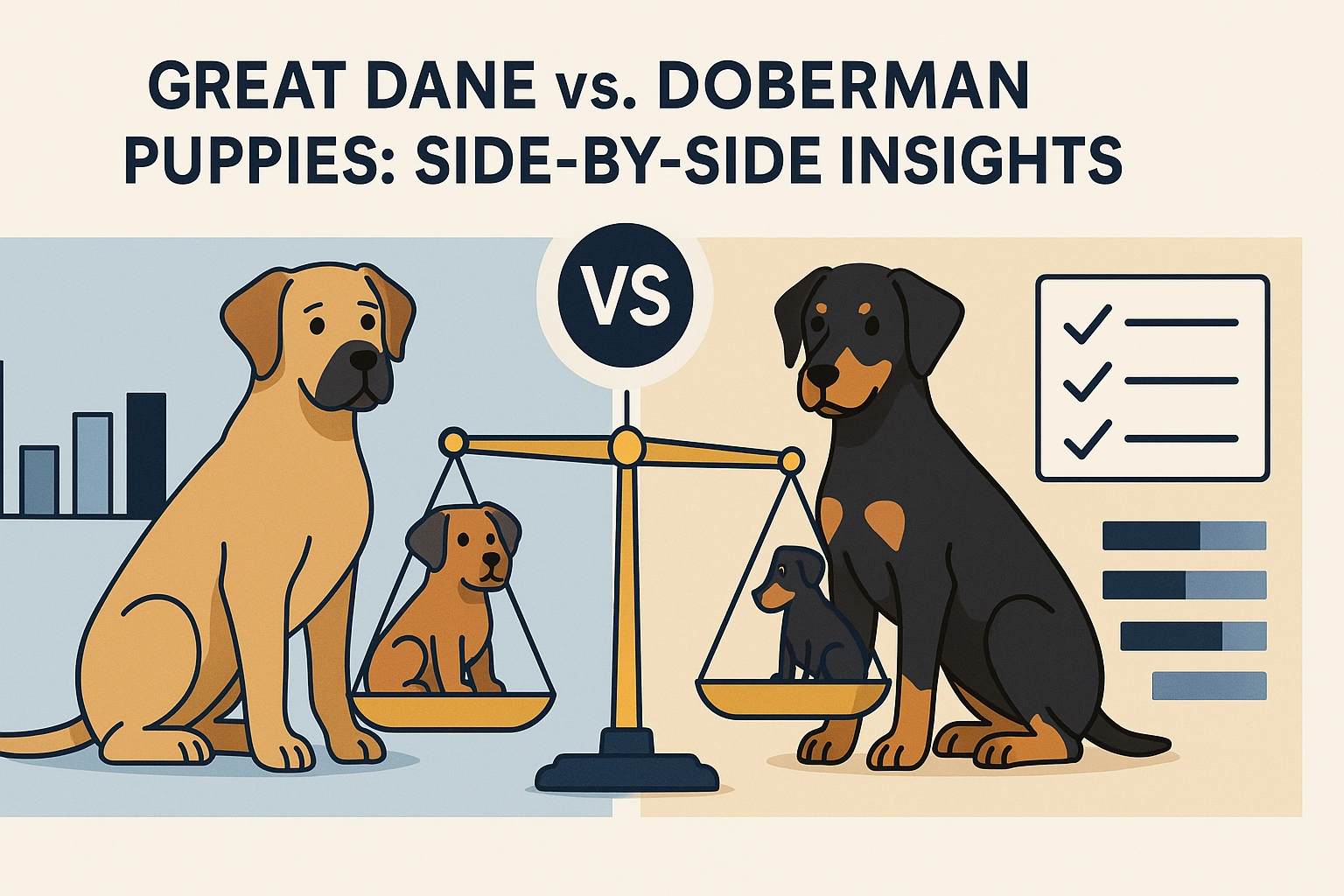
Torn between a pocket rocket and a gentle giant? If you’re eyeing doberman great dane puppies but aren’t sure which breed fits your life, you’re in the right place. In this side-by-side comparison, we’ll break down what it’s really like to raise a Great Dane puppy versus a Doberman puppy—without the jargon or overwhelm.
You’ll learn how they differ in size (now and full-grown), personality, energy levels, and training style. We’ll cover daily exercise needs, grooming basics, feeding and budget considerations, and what kind of home—apartment or yard—suits each breed best. We’ll also touch on health outlook, socialization tips for beginners, and how each puppy handles kids, other pets, and alone time. By the end, you’ll have a clear, beginner-friendly snapshot to help you choose the pup that matches your lifestyle, schedule, and goals. Let’s get you from “They’re both adorable—help!” to a confident, well-matched pick.
1. Understanding the Basics: Great Dane vs. Doberman
Breed basics and history
Great Danes are gentle giants bred centuries ago to hunt boar and guard estates, but today they’re mellow companions who think they’re lap dogs. Dobermans, created by tax collector Louis Dobermann in the late 1800s, were designed as sleek, trainable protection dogs and excelled in police roles too. Expect different silhouettes: the Dane’s massive frame and rectangular head versus the Doberman’s athletic build and wedge-shaped head. If you’re eyeing doberman great dane puppies, know that litters from Dane mothers can range widely—about 5–18 puppies—and mixed litters can show a coin flip of traits; one Doberdane named Moose tested 50.5% Great Dane and 49.5% Doberman. For a primer on this recent cross, see this Doberdane breed overview. Whichever route you choose, start interviewing breeders about early socialization, exposure to sounds, and temperament of parents.
Size, temperament, and health
Danes can tower over kitchen counters and need space for safe turns; Dobermans fit better in tighter homes but demand more exercise and jobs. Danes skew affectionate, patient, and goofy; Dobermans are loyal “Velcro” shadows with sharper alertness—great for watchdog duty. Pros: Danes shine as calm family companions; Dobermans offer top-tier trainability and protection. Cons: Danes bring giant-breed costs and shorter lifespans; Dobermans need mental work and confident handlers. Health-wise, a study reports 4.2% of Great Danes develop cervical spondylomyelopathy (Wobbler syndrome); manage growth, keep them lean, and avoid repetitive jumping. Danes generally have good teeth, but both breeds benefit from daily brushing, dental chews, and cleanings. Recommendation: pick a Dane for low-key cuddles, a Doberman for active training partners, or a Doberdane as a middle ground—then prioritize puppy classes, crate and house training, and socialization by 12–16 weeks.
2. Health Considerations
Common breed-specific risks
Great Danes face giant-breed concerns: gastric dilatation-volvulus (bloat), hip and elbow dysplasia, osteosarcoma, dilated cardiomyopathy (DCM), and a neck disorder called Wobbler syndrome (cervical spondylomyelopathy, CSM). Survey data from the Veterinary Medical Database estimate about 4.2% of Great Danes develop Wobbler syndrome, and a magnetic resonance imaging study in Great Danes details the osseous-associated form typical of the breed. They also generally have good teeth but still need regular dental cleanings to prevent periodontal disease. Dobermans share some issues (hypothyroidism, von Willebrand disease, orthopedic strain) but are especially noted for DCM—published prevalence varies by region and screening method, roughly 13–58% in studies—plus a disc-associated form of CSM. Put simply: Danes lean toward skeletal/neck and bloat problems; Dobermans lean toward cardiac and clotting disorders.
What this means for Doberdanes (the hybrid)
Because Doberdanes combine both lines, risk can stack rather than cancel. The cross is recent (within ~20 years), so evidence is limited and “hybrid vigor” isn’t guaranteed. One real-world example: DNA on a Doberdane named Moose showed 50.5% Great Dane and 49.5% Doberman, reminding us puppies can inherit health genes from either side. Practically, expect heightened attention to heart screening (given Doberman DCM rates) and to neck/orthopedic soundness (from the Dane side’s CSM and rapid growth). For doberman great dane puppies, ask breeders for cardiac echoes/Holters on parents, vWD DNA results, thyroid panels, and hip/elbow certifications.
Long-term care game plan
Plan frequent vet visits early (every 3–4 weeks until 16 weeks), then every six months through adolescence; adults should see the vet at least annually, and big mixes benefit from twice-yearly checks after five. Add yearly echocardiograms plus 24-hour Holter monitoring starting around age two, sooner if there’s fainting, cough, or exercise intolerance. To protect growing joints, use a giant-breed puppy diet with controlled calcium, keep weight lean, and stick to low-impact exercise. Reduce bloat risk with multiple small meals, slow-feed bowls, and no hard play 60–90 minutes around mealtimes; ask about prophylactic gastropexy. Keep nails short, ears clean, and brush teeth several times a week; schedule professional dental cleanings as advised. Early socialization, crate training, and calm leash manners also prevent strain on a rapidly growing body.
3. Training and Socialization Needs
Great Danes
Great Danes learn best with low-impact, upbeat sessions that build manners and confidence. Try 3–5 minute bursts teaching sit-for-greetings, loose-leash walking, and a solid place cue for doorbells. Because about 4.2% of Danes develop osseous-associated cervical spondylomyelopathy (Wobbler syndrome), use a front-clip harness, skip leash corrections, and avoid jump-based drills. Start cooperative care early: pair tooth-brushing with treats (Danes generally have good teeth but still need routine care), practice a chin rest for exams, and make nail trims routine. Socialize between 8–16 weeks with happy exposures; crate train in a giant crate by feeding meals inside and lengthening stays.
Dobermans
Dobermans are driven, clever learners who thrive on structure and mental work. Use marker training and shaping, with micro-sessions (8–10 reps, two minutes each) for recall, impulse control, and heelwork. Build neutrality to strangers and dogs: reward attention on you, add distance when arousal spikes, and keep greetings short. Enrich with nosework, trick training, and flirt-pole rules—sit, chase, trade—to satisfy prey drive without chaos. Crate time becomes decompression after workouts; rotate puzzle feeders, prevent demand-barking, and remember that consistent cues and generous reinforcement outperform any punishment approach.
Doberdanes
With designer mixes rising, Doberman Great Dane puppies—often called Doberdanes—have emerged over 20 years. One pup, Moose, DNA-tested 50.5% Great Dane and 49.5% Doberman, a reminder to train the dog in front of you. Blend plans: giant-breed leash manners and low-impact body handling from the Dane side, plus Doberman-style mental workouts and a long-line recall. Quantify early socialization: 10 new people weekly, three surfaces, two short car rides, one dog meet-up, all paired with treats. Large Dane litters (5–18 pups) mean variety; puppy class helps. For background, see the overview of the Doberdane mix.
4. Lifestyle and Living Requirements
Space and exercise
Great Danes are surprisingly chill indoors, but their sheer footprint matters: a 120–170 lb “lap dog” needs room to turn around, stretch out, and navigate hallways without clipping furniture. Plan on two to three easy outings totaling 45–60 minutes daily plus potty breaks; avoid repetitive jumping or hard stairs to protect growing joints. Because about 4.2% of Great Danes develop osseous-associated cervical spondylomyelopathy (Wobbler syndrome), use a front-clip harness, nonslip rugs, and controlled leash work; see this cervical spondylomyelopathy (Wobbler syndrome) overview for background. Dobermans, by contrast, usually need 60–90 minutes of exercise plus daily brain work (obedience patterns, scent games) to keep their sharp minds satisfied. Doberdanes—the Doberman/Great Dane mix that’s surged over the last 20 years—often land in the middle: lanky jogging buddy outside, couch ornament inside. For apartments, a 48–54-inch crate, strategically placed baby gates, and a potty schedule make doberman great dane puppies manageable while they mature.
Size and home logistics
That giant frame affects everything: vehicles with fold-down cargo areas, elevators big enough for you and the dog, and floors that aren’t ice-slick. Low tables, dangling cords, and fragile décor become tail-level hazards; minimalist layouts help. In rentals, check breed and weight policies and consider noise—claw taps and excited zoomies carry. Outdoor space is nice but not mandatory; what matters most is consistent outings and safe stair access. With Great Dane litters often 5–18 puppies, socialization to elevators, lobby traffic, and crates keeps chaos down.
Grooming, feeding, and adaptability
Both breeds have short coats; weekly rubber curry brushing and monthly baths usually suffice, though Danes drool towels are an accessory. Great Danes generally have good teeth—still brush 2–3x weekly and plan annual cleanings. Feed measured, giant-breed–appropriate portions split into two to three meals, using slow bowls to curb gulping. Expect higher food and medication costs simply due to size. Doberdanes vary: one DNA-tested example, “Moose,” was 50.5% Great Dane and 49.5% Doberman—energy, appetite, and weather tolerance followed suit. With the right routines, all three options can thrive in homes from condos to cul-de-sacs.
5. Suitability for First-Time Owners
Beginner-friendly snapshot
Great Danes often feel more beginner-friendly thanks to their mellow, people-focused vibe, but their sheer size means you must start structure immediately—early socialization, crate and house routines, and short, low-impact leash sessions (a growing trend for large-breed pups). Plan care with health in mind: about 4.2% of Great Danes develop osseous-associated cervical spondylomyelopathy (Wobbler syndrome), so limit rough play and stairs during growth, and maintain daily tooth-brushing since Danes generally have good teeth. Dobermans are brilliant, loyal, and fast learners, yet their intensity, watchdog instincts, and exercise needs can overwhelm first-time owners without steady guidance and mental work. The Doberdane—this Doberman–Great Dane mix has risen with designer breeds in the past 20 years—can land anywhere on the spectrum; one dog named Moose tested 50.5% Great Dane and 49.5% Doberman, underscoring unpredictable trait mix. Pros include affectionate temperaments, biddability, and athleticism for active homes willing to train daily. Cons include variability (think Doberman-level drive in a Dane-sized body) and giant-breed vet bills; if you’re eyeing doberman great dane puppies, screen breeders carefully—Great Danes whelp 5–18 puppies, so health testing and thoughtful placements matter.
Long-term commitment and service-dog cautions
All three options require a long game: quality large-breed food, pet insurance, orthopedic beds, weekly nail/ear/dental care, and ongoing “maintenance” training to keep 90–150+ pounds polite with guests and kids. Schedule regular vet checks that include neurologic screening for Dane-line dogs, and budget time for daily mental exercise (scent games, place training) plus moderate, joint-friendly walks. As service dogs, proceed cautiously: Great Danes’ size aids mobility work but orthopedic and CSM risks can shorten careers; Dobermans’ protective edge can clash with public-access neutrality; Doberdanes inherit both the upsides and the risks. For first-time owners, the safest bet is a well-bred Great Dane with breeder and trainer support, or an adult, temperament-tested Doberman or Doberdane from rescue. Before committing, meet parents, verify health clearances, and map a first-year plan—socialization calendar, insurance quote, and a monthly training budget.
6. Conclusion: Selecting the Right Breed for You
Quick recap
Great Danes tend to be mellow, couch-ready companions; Dobermans bring sharper drive and stamina; Doberdanes sit somewhere between. Health planning differs too: Great Danes are predisposed to osseous-associated cervical spondylomyelopathy (Wobbler syndrome)—about 4.2% in a Veterinary Medical Database survey—and still need routine dental care despite generally strong teeth. Training needs are high for all three, with extra emphasis on early socialization for giant-breed Danes. Practicalities matter: Great Dane litters can run 5–18 puppies, affecting waitlists; Doberdanes—an emerging cross in the last 20 years—are less predictable. A real-world DNA test of a Doberdane named Moose showed a 50.5% Great Dane, 49.5% Doberman split, highlighting why size and temperament may swing.
How to choose and next steps
If you want a chill housemate and have space for a 120–170 lb footprint, a Great Dane fits. If you’re an active trainer who enjoys distance runs and daily brain games, a Doberman shines. If you love traits of both and accept variability, consider doberman great dane puppies, but meet parents and adult relatives first. Before you commit, consult breed-savvy vets and ethical breeders: ask for OFA hips/elbows, cardiac exams, and discuss Wobbler risk, bloat plans, and socialization. Budget for insurance and training, map a 12‑month care plan, and commit—responsible prep makes the right puppy a lifelong partner.