
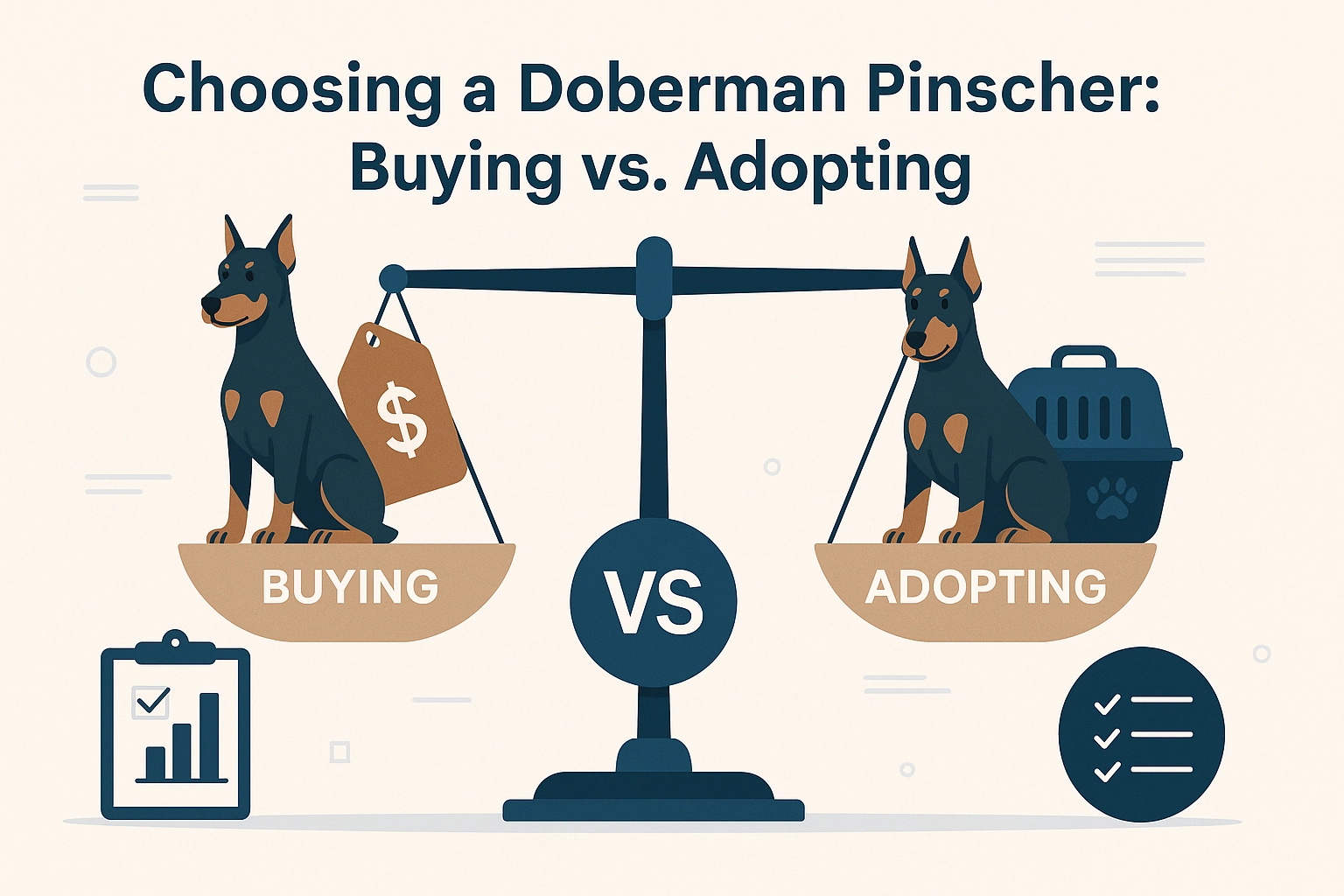
Sleek, intelligent, and deeply loyal, the Doberman Pinscher is a standout companion—but deciding how to welcome one into your life can feel overwhelming. As you search for a doberman pinscher dog for sale, it’s worth pausing to compare two paths: buying from a reputable breeder or adopting from a rescue. Each option comes with distinct benefits, responsibilities, and costs, and understanding them will help you make a confident, ethical choice.
In this beginner-friendly comparison, you’ll learn what to expect from both routes, including initial and long-term expenses, health testing and pedigree considerations, temperament and energy levels, and the kind of support you can expect from breeders versus rescues. We’ll walk through availability and wait times, contracts and adoption policies, and how each path can impact training and socialization. You’ll also get practical checklists to evaluate breeder credibility and rescue fit, plus common red flags to avoid. By the end, you’ll have a clear, step-by-step framework to choose the best way to bring a Doberman into your home—and set both of you up for success.
Comparison Criteria
Cost and long-term budget
For a beginner comparing adoption versus a doberman pinscher dog for sale from a breeder, start with total cost of ownership. Adoption typically ranges $300–$400 and often includes spay/neuter and vaccines, while reputable breeders charge $1,000–$2,500+, with 2025 projections trending to $1,000–$3,500+ due to demand and health guarantees. Add recurring expenses: structured obedience classes ($150–$300 per course), pet insurance ($40–$90/month), food for a large, active dog, and an emergency fund. A breeder puppy may include a contract, microchip, initial health guarantee, and lifetime support; adoption costs less up front but may come with limited background information. Use the AKC Marketplace listing for Doberman Pinscher breeders to benchmark prices and see what reputable offerings include. Actionable tip: build a first-year budget of $3,000–$5,000 regardless of source to cover training, supplies, and preventive vet care.
Breeder practices and health testing
Ethical breeding is critical in Dobermans due to inherited risks: up to 45% may be affected by dilated cardiomyopathy (DCM). Prioritize breeders who perform and share documented results for cardiology (board-certified echocardiogram and 24-hour Holter, ideally annually), vWD DNA status, hips/elbows (OFA or PennHIP), thyroid, and eyes. Expect a written contract/letter of understanding detailing health guarantees, a return-to-breeder clause, limited registration, and spay/neuter or co-ownership terms. Red flags include no proof of testing, third-party brokers, and reluctance to let you meet the dam or discuss temperament. Rescue groups may provide medical records and behavior notes, but testing depth varies; weigh this against cost savings. Ask for registered names and lab sources to independently verify results.
Temperament, training, and lifestyle fit
Dobermans are alert, loyal protection dogs with high energy needs; plan 60–90 minutes of daily exercise plus mental enrichment. Early socialization and structured obedience are non-negotiable to shape a stable adult, especially for first-time owners. Well-bred Dobermans should be confident and biddable, yet still require consistent training and financial resources. Use cases: families wanting a steadier energy level might favor an adult rescue; sport or show goals point to a breeder who titles dogs and temperament-tests breeding stock. Pros/cons: puppies offer long-term bonding but demand intensive training; adults reveal established temperament and may settle faster. With these criteria set, the next section will compare real-world options side by side to clarify the best path for your household.
Cost Analysis: Purchase vs Adoption
Upfront costs
Buying a Doberman Pinscher through a reputable breeder typically ranges from $1,000 to $3,500+, with 2025 projections trending higher due to demand and health guarantees; see 2025 Doberman Pinscher prices: $1,000–$3,500+. Expect a detailed contract or letter of understanding, proof of health testing, vaccinations, and limited AKC registration. By contrast, adoption fees usually fall between $250 and $800 (commonly $300–$400), and often include spay/neuter, microchipping, and core shots. For beginners comparing adoption to a doberman pinscher dog for sale, that initial delta of $700–$2,700 can free budget for training, supplies, or pet insurance. However, ethically bred puppies may offer more predictability in temperament and known family health history.
Long‑term ownership costs
Regardless of origin, Dobermans are high‑energy working dogs that require extensive early socialization and a structured obedience class. Plan $150–$300 for a 6–8 week group course, with advanced training or sport foundations adding $300–$800+. Food, routine care, and preventives commonly run $900–$1,800 per year. Cardiac risk is a major variable: up to 45% of Dobermans may develop dilated cardiomyopathy (DCM). Annual screening in at‑risk adults (echo and/or Holter) can add $300–$800 per year; insurance averages $50–$90 per month and can offset large bills. Well‑bred dogs may reduce inherited risk but still need ongoing testing.
Which option is most cost‑effective?
Adoption is usually the best value when your budget is tight and you’re open to an adult dog whose behavior has been evaluated by rescue. Breeder purchase costs more upfront but can include mentorship and health guarantees; request OFA records plus recent echo/Holter on parents. Either way, reserve $1,500–$3,000 for first‑year extras and training. If in doubt, start with adoption and invest the savings in classes and insurance; revisit breeder options once your lifestyle fits the breed’s demands.
Health and Genetics Considerations
Screening basics: what to request from breeders versus rescues
For Doberman buyers comparing adoption to a doberman pinscher dog for sale from a breeder, health screening availability is the first divider. Reputable breeders typically provide a documented protocol that includes puppy bile-acid testing (to screen for liver shunts), von Willebrand disease (vWD) DNA status, thyroid panels, and orthopedic evaluations, plus cardiac exams such as a 24-hour Holter monitor and echocardiogram on breeding dogs within the past 12 months. Ask for OFA/CHIC numbers, Holter summaries, and echo reports—top breeders readily share them and outline follow-up schedules in a contract or letter of understanding. Ethical rescues may not have full genetic histories, but some partner with cardiologists for baseline exams; ask whether puppies received bile-acid tests and whether adult fosters had a recent Holter. Whichever path you choose, prioritize early socialization and a structured obedience class—good health data plus training support is the beginner’s safest start.
DCM: what the research means for buyers
Dilated cardiomyopathy (DCM) remains the breed’s signature risk, affecting up to 45% of Dobermans over their lifetimes. DNA tests for known DCM variants identify some risk, but they do not replace annual cardiology (Holter/echo) because DCM is complex and progressive. Follow ongoing findings—see this summary of dilated cardiomyopathy research in Dobermans—and budget for yearly screening whether you adopt or purchase. Many quality breeders require buyers to maintain cardiac testing, reflecting current best practice and the breed’s energetic, high-demand lifestyle. A well-bred Doberman often has fewer surprises, but owners must commit financial resources for health maintenance and training throughout adulthood.
Why breeder-funded studies and genetic diversity matter
Breeder-funded studies, health registries, and biobanks drive real progress by linking pedigrees, DNA markers, and clinical outcomes; they also inform mating choices that reduce risk without shrinking the gene pool. Prefer breeders who: contribute to research, publish health results (not just “clear by parentage”), track coefficient of inbreeding (COI), and avoid popular-sire practices. These programs improve population-level cardiac and liver health while preserving working ability and temperament. As prices trend higher with health guarantees, the premium often reflects this investment in science. For adopters, look for rescues that share health records and collaborate with breed clubs—transparency and data participation benefit every Doberman.
Ethical Breeder Practices
Evolving standards in Doberman breeding
Over the last decade, reputable breeders have shifted from quick placements to evidence-based rearing. Many now keep puppies until 10–12 weeks to complete temperament evaluations, start crate and leash work, and begin structured socialization—helpful for a highly energetic, alert protection breed that benefits from early obedience classes. Health screening has also expanded: annual 24‑hour Holter monitoring and echocardiograms for dilated cardiomyopathy (DCM), von Willebrand disease (vWD) DNA testing, thyroid panels, and hip evaluations through OFA or PennHIP. This rigor is warranted; studies suggest up to 45% of Dobermans may be affected by DCM. These practices add cost, which helps explain 2025 purchase prices trending to $1,000–$3,500+ for a doberman pinscher dog for sale from an ethical program.
What “ethical” means for genetic health
Ethical breeding prioritizes longevity, stable temperament, and genetic diversity over litter volume. Breeders pair dogs with current cardiac clearances, avoid popular‑sire effects, and manage the coefficient of inbreeding to reduce risk across generations. Puppies are placed with contracts outlining health guarantees, a letter of understanding, and a lifetime return policy; responsible programs support training plans and budgeting for maintenance. While no breeder can promise a dog free of disease, careful selection and transparent testing reduce the incidence of serious neuro or health issues and set owners up for success with ongoing training and exercise.
How to identify a reputable breeder
Ask for verifiable proof: recent Holter and echo reports, OFA/CHIC numbers, vWD DNA results, thyroid and hip documentation. Observe puppy-raising: in‑home rearing, early neurological stimulation, and keeping litters past eight weeks. Review the contract for return clauses, limited registration for pets, and spay/neuter guidance. Expect waitlists and interviews, not instant deposits or multiple litters always available. Membership in breed clubs and adherence to a code of ethics—see the Doberman Pinscher Club of America guidelines—are strong signals. These checks make your breeder-versus-rescue comparison clearer.
Temperament and Training Needs
What Doberman temperament means for beginners
Dobermans are alert, intensely loyal protection dogs with a strong desire to stay close to their people. Well-bred individuals are confident and stable—often backed by a breeder contract or letter—yet they are sensitive and respond best to calm, consistent leadership. For a doberman pinscher dog for sale through a reputable breeder, temperament is more predictable via parent testing and early handling, while adoption lets you evaluate a known adult personality through foster notes and meet-and-greets. Beginners who prefer to mold behaviors from scratch may enjoy a puppy; those wanting immediate clarity on tolerance for kids, cats, or busy urban spaces often do better with a screened adult.
Training, exercise, and owner readiness
Early, structured obedience is essential: enroll in a 6–8 week class during the 8–16 week socialization window, then maintain 2–3 short sessions daily focusing on recall, neutrality, and impulse control. Plan 90–120 minutes of exercise plus mental work (nosework, rally, puzzle feeders); bored Dobermans invent jobs. DIY can succeed, but classes add coaching and distraction-proofing—critical for a powerful athlete. Health intersects with training: up to 45% of Dobermans are affected by dilated cardiomyopathy (DCM), so choose breeders prioritizing cardiac/genetic screening and budget for periodic checks. Comparison snapshot: breeder puppies cost $1,000–$3,500+ (2025 trend), offer early socialization and lifetime support but require intensive house‑training; adoption at $300–$400 provides lower cost and known behavior history, though remedial work may be needed. If your schedule is erratic or exercise areas are scarce, postpone or select a lower‑drive adult; ready owners gain a devoted partner who thrives with structure and purpose.
Conclusion and Recommendations
Whether you adopt or seek a doberman pinscher dog for sale from a breeder, the trade‑offs are clear. Adoption keeps upfront costs low ($300–$400) and often places steady, adult Dobermans that rescues have temperament‑tested, while breeder puppies cost $1,000–$2,500+ (with 2025 projections reaching $3,500+) but add predictability, early rearing, and a contract or letter of understanding. Either path demands early, structured obedience and intensive socialization; plan 3–5 new people/places weekly and 60–90 minutes of daily exercise for this highly energetic, protective breed. Health diligence matters: up to 45% of Dobermans can be affected by dilated cardiomyopathy (DCM), so sourcing and screening are pivotal. A well‑bred dog typically shows stable nerves and fewer inherited risks, but you’ll still need financial bandwidth for training, insurance, and preventive cardiology. Beginners wanting a calmer start may favor a mature rescue; families wanting a predictable puppy trajectory may prefer a health‑tested breeder.
Recommendations: if you buy, choose a breeder who provides recent echocardiogram and 24‑hour Holter results for parents, DNA for DCM variants and vWD, and a return‑to‑breeder clause. If you adopt, select rescues that temperament‑test, share medical history, and offer a trial period. Budget $3,000–$5,000 for year one (including insurance at roughly $40–$90/month). Enroll in a beginner obedience class within two weeks of arrival, and map a socialization calendar. Schedule a cardiology baseline at 12–18 months and annually thereafter. When in doubt, consult a Doberman‑savvy trainer before committing.