
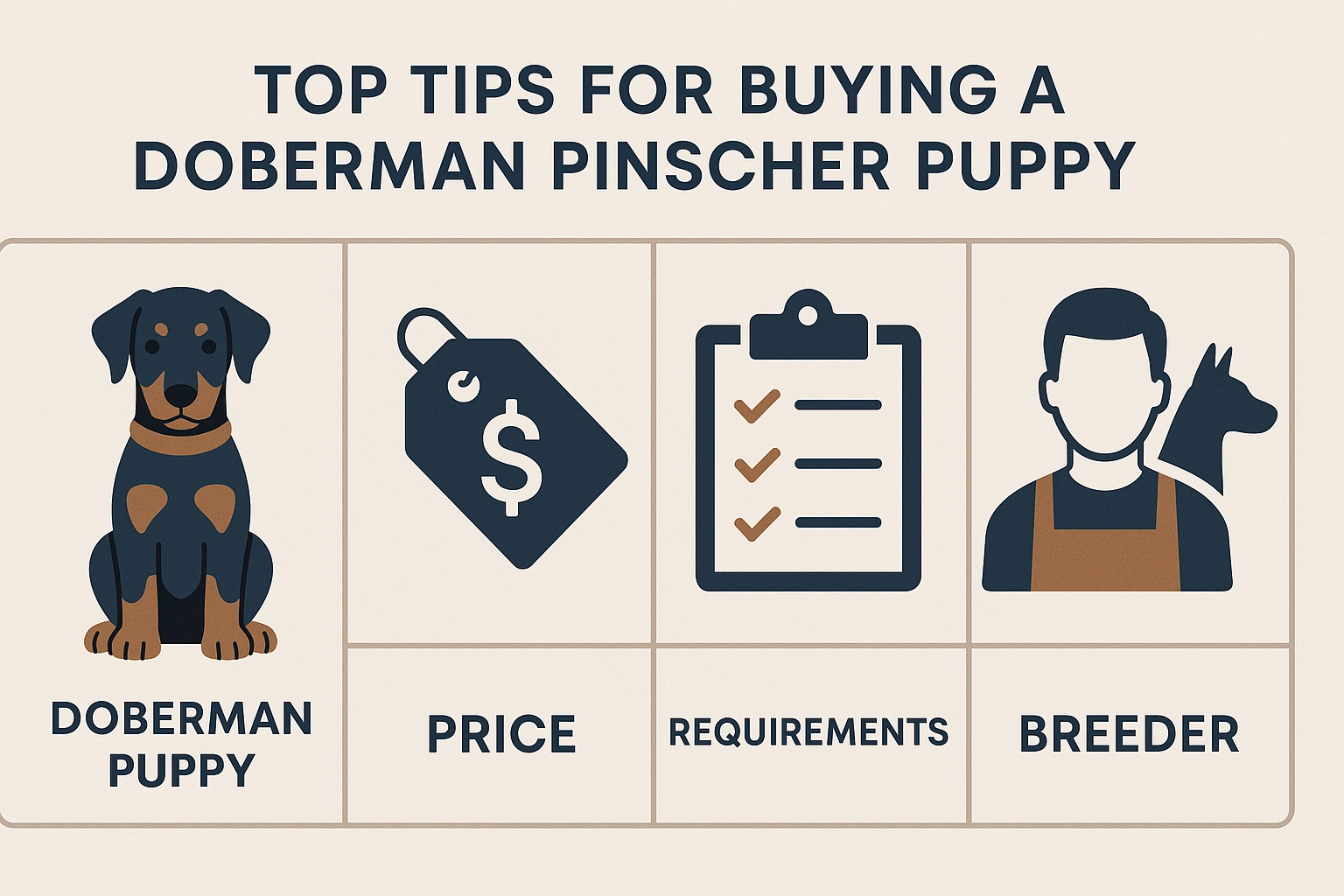
Thinking about bringing home a sleek, loyal shadow who adores you and keeps an eye on the house? Meet the Doberman Pinscher. If you’ve been scrolling past every doberman pinscher for sale puppy online, it’s easy to get swept up by those alert ears and intelligent eyes. But before you fall for the first cute face, a little guidance can make the difference between a perfect match and a stressful surprise.
In this beginner-friendly list, we’ll break down the essentials: how to find a reputable breeder (and avoid puppy mills), which health tests and paperwork actually matter, how to read a puppy’s temperament, and the real costs and commitments to expect. You’ll get simple questions to ask sellers, early training and socialization basics, and the subtle red flags that say “keep looking.” We’ll also cover how to prepare your home, what gear you’ll need on day one, and tips for choosing the puppy that fits your lifestyle.
By the end, you’ll feel confident, clear-eyed, and ready to bring home the right Doberman—one that grows into a steady, devoted companion for years to come.
1. Understanding the Doberman Pinscher Breed
1) Personality: affectionate, playful, energetic
Dobermans are famously “Velcro dogs,” meaning they bond hard and love being where you are—on the couch, in the kitchen, and yes, at the front door greeting guests. They’re playful and high-octane, so plan on daily fetch, tug, and puzzle games to tire both body and brain. Expect rapid growth; a male six-month-old Doberman Pinscher typically weighs 50 to 65 pounds, and that bigger teen body will still feel like a lap dog. Puppies can be mouthy (“bitey”) during the learning phase, so early obedience classes and consistent training are essential, not optional. Enroll in puppy kindergarten by 12–16 weeks and run two to three 10-minute training sessions daily focused on impulse control (sit/stay, leave-it) and polite play.
2) Health basics: watch for DCM and proactive screening
Dilated cardiomyopathy (DCM) is the breed’s headline health concern, affecting up to 45% of Dobermans, so responsible breeders prioritize cardiac screening. Ask for proof of health testing (OFA listings, echocardiogram, 24-hour Holter) and discuss what the breeder is doing to reduce risk—an area seeing increased focus through collaboration with universities and research groups. Expect a 2025 purchase price of around $1,000 to $3,500+ depending on pedigree, health tests, and breeder reputation. Action step: request the sire and dam’s latest echo/Holter dates and results, plus temperament notes. Plan a baseline heart evaluation by age two, keep your dog lean, and track resting heart rate to catch changes early.
3) The right home: family-oriented, structure, and clear expectations
A Doberman thrives as an indoor family companion with structure, not as a backyard ornament. Budget 60–90 minutes of daily exercise plus mental work (nose games, obedience, trick training) and build alone-time gradually to prevent separation stress. When you see a doberman pinscher for sale puppy listing, do basic litter research, a visual inspection, and simple temperament testing, and clearly tell the breeder what you want in a dog (sport, show, active pet). Look for breeders affiliated with reputable clubs (e.g., DPCA/local kennel clubs) and browse the AKC Doberman Pinscher puppies marketplace for vetted options. There’s rising interest in European lines; discuss your lifestyle and preferences so you’re matched to the right temperament and energy level.
2. Importance of Choosing a Reputable Breeder
1) How to identify reputable breeders
A reputable Doberman breeder is transparent, selective, and involved for the life of the dog. Expect membership in DPCA or local kennel clubs, a written contract, a waitlist, and plenty of questions for you—see the DPCA’s buyer guidance in Buying A Doberman Pinscher. Priced fairly, puppies typically run $1,000–$3,500+; unusually cheap or sky‑high prices deserve extra scrutiny. Quality breeders invite you to research the litter, meet the dam (often the sire by video), and share basic temperament‑testing results. They also expect you to communicate exactly what you want in a dog, which aligns with community advice to be clear about experience, expectations, and commitment to early obedience classes, since puppies can be “bitey.”
2) Avoiding inbreeding and unethical practices
Inbreeding and unethical mass‑production create real risks for genetic disease, weak structure, and unstable temperaments. Ask for a five‑generation pedigree and a coefficient of inbreeding (COI); many conscientious breeders aim to keep COI in the single digits to balance type and diversity. Red flags include “always available” puppies, multiple concurrent litters, cash‑only, no contract, refusal to show where pups are raised, or willingness to ship before eight weeks. Responsible programs limit litters per dam, socialize puppies in‑home (ENS, sound desensitization), and start crate and muzzle handling to help manage that high‑energy, mouthy phase. Be cautious of marketing buzz like “European Dobermans” without proof of titles, health tests, and temperament assessments; ask exactly why those lines were chosen for the breeding. If a doberman pinscher for sale puppy is listed far below market, assume corners were cut elsewhere.
3) Importance of health tests (including DCM)
Health testing is non‑negotiable—dilated cardiomyopathy affects up to 45% of Dobermans. Require recent (≤12 months) Holter 24‑hour monitoring and a cardiologist echocardiogram for both parents, with PDK4/TTN screening disclosed. Also ask for vWD DNA status, OFA/PennHIP hips, elbows, thyroid, and eye clearances; top programs now share results and support university research. Get PDFs and a 2–3 year health guarantee, plus growth guidance—e.g., a six‑month male often weighs 50–65 pounds—so you can plan training, diet, and insurance.
3. Cost Considerations
1) Price range: $1,000 to $3,500+
For a doberman pinscher for sale puppy, expect a 2025 purchase price in the $1,000 to $3,500+ range. Companion puppies from health-tested, ethical breeders commonly land around $1,800 to $2,800, while show or working prospects from titled parents, with ear cropping and initial posting included, can reach or exceed $3,500. European-line pups and imports add costs for transport and paperwork, often pushing prices well above the top end. Extremely low prices can be a red flag for limited health testing or minimal breeder support. Remember: the sticker price is only the beginning; quality usually reflects investment in genetics, care, and transparency.
2) Factors influencing price
Comprehensive health testing is the biggest driver, especially screening for dilated cardiomyopathy (DCM), which affects up to 45% of Dobermans; many breeders now fund and follow DCM research at Virginia Tech. Expect higher prices when breeders provide Holter/echo results, genetic panels, and documented temperament testing (litter research and visual inspection are standard best practices). Membership in reputable organizations (e.g., DPCA) and robust contracts with health guarantees often add cost but reduce long-term risk. Geography and demand play a role; “rare color” or size premiums deserve scrutiny, so ask what truly justifies the price. Plan for first-year essentials: puppy classes ($150–$300 per 6–8 weeks) are invaluable because Dobermans are high-energy and can be “bitey” early on, and pro training can save your furniture and fingers. Budget for food (a six-month male is 50–65 lbs), vet care, and insurance ($40–$90/month) to protect against surprises.
3) Projected trends for 2025
Expect modest price increases as more breeders adopt rigorous cardiac testing and share data, responding to buyer demand for healthier lines. Interest in European Dobermans is rising, which may lengthen waitlists and elevate top-end prices for show-ready or import puppies. You’ll also see tighter screening: breeders want clear communication about your goals and experience, which can influence placement timing and fit. Action steps: request recent Holter/echo results, vWD testing, and hip evaluations; ask for itemized pricing (cropping, microchip, early training). Be ready with a deposit and a 3–9 month wait window to secure the right pup at the right price.
4. Regional Availability and Breeder Resources
Finding a doberman pinscher for sale puppy near you
- California, Ohio, and Michigan snapshot
- California: Demand is high and waitlists are common, especially around Los Angeles, the Bay Area, and Sacramento. Expect the higher end of the typical purchase range and plan ahead for in-person pickups (summer heat can limit airline cargo). Reputable kennels often prioritize health testing due to risks like dilated cardiomyopathy (affects up to 45% of Dobermans), so ask for Holter and echocardiogram results. Urban buyers should also plan for growth—by six months, many males weigh 50–65 pounds—when checking apartment pet policies and training resources.
- Ohio: The Midwest has multiple hobby and show breeders within a few hours’ drive. You’ll find a mix of conformation and working-line litters; ask about temperament goals and early socialization to avoid a mismatch.
- Michigan: Look for breeders active in obedience, protection sports, or conformation around Detroit, Lansing, and Grand Rapids. Winter litters may have easier pickup logistics; still, reserve early and confirm contracts and after-sale support.
- Use national and local clubs to shortlist Start with the DPCA Breeder Referral and your state kennel club. Prioritize breeders who are club members, temperament-test puppies, and provide proof of health screening (hips, thyroid, von Willebrand’s, and heart testing). Share your goals clearly—family companion vs. sport prospect—since Dobermans need consistent training and early classes to manage their energetic, sometimes “bitey,” puppy stage. If you’re eyeing European lines, verify titles, import paperwork, and that the same health standards are met.
- Online classifieds—how to filter the good from the risky Classifieds and social platforms can surface local litters, but vet the source. Ask for live video of dam and puppies, vet records, and copies of health tests; request two references (one buyer, one veterinarian). Avoid rock-bottom prices, pressure to wire deposits, and sellers unwilling to meet at the kennel. Apply basic litter research: observe confidence, recovery from startles, and responsiveness during a visit. When possible, pick up in person and bring a written checklist so emotion doesn’t override your criteria.
5. Preparing for a Doberman in Your Home
1) Training and integration as family members
If you’re bringing home a doberman pinscher for sale puppy, treat them as full family members with clear, consistent rules. Start day one with upbeat obedience and enroll in a puppy class within weeks; many owners report a ‘bitey’ phase, so teach impulse control and gentle mouth handling early. Mark and reward calm sits at doors and redirect nipping to tug toys. Socialize intentionally between 8–16 weeks: friendly strangers, car rides, vacuums, vet tables. Tell your breeder what you want and your experience so you’re matched with a temperament that fits. Run two or three five-minute sessions, two or three times daily, plus calm cuddles to build trust.
2) Creating a suitable living environment
Puppy-proof rooms: tuck cords, secure trash, de-clutter floors; baby gates and a crate create safe zones. A male Doberman can weigh 50–65 pounds by six months, so choose a sturdy crate with non-slip mats and chew-resistant bedding. Plan a fenced yard (ideally 6 feet) or commit to leash walks; add puzzle feeders and snuffle mats to burn mental energy. Given dilated cardiomyopathy affects up to 45% of the breed, establish a proactive vet relationship and keep health records organized for future screening; health-focused breeders increasingly test, and your role is ongoing monitoring. Anchor water bowls, add non-slip runners on stairs, and rotate durable toys to prevent boredom.
3) Time commitment for care and exercise
Budget 60–90 minutes of daily exercise split into two outings: brisk walks, structured fetch, or nosework. Layer in 10–15 minute training blocks two to three times daily and two to three short play breaks to channel puppy intensity. Plan midday potty breaks or a dog walker; most young Dobermans aren’t ready for a full workday alone. Groom weekly (baths as needed), trim nails every 1–2 weeks, and schedule daily tooth-brushing. Protect nap windows—puppies need lots of sleep—to reduce overstimulation and nippiness, and you’ll see better focus for tomorrow’s training.
Conclusion: Making the Right Choice
- Recap the big rocks: fit, health, temperament, and budget. Expect $1,000–$3,500+ in 2025 for a doberman pinscher for sale puppy. Choose breeders who health-test and belong to DPCA or local clubs; DCM affects up to 45% of Dobermans, so parental echo/Holter records matter. Pups are high-energy and often bitey, so plan early obedience and decide if you want companion, sport, or show—American or increasingly popular European type.
- Prepare and research with intention. Start with litter research, then meet in person for visual inspection and simple temperament checks like startle recovery and engagement. Request OFA numbers, relevant genetics, and current cardiac testing on parents, aligning with the trend toward comprehensive screening. At home, puppy-proof, size a crate for rapid growth (a male can reach 50–65 pounds by six months), and reserve a reputable puppy class.
- Take clear, practical next steps. Draft a one-paragraph owner brief about your lifestyle and expectations—breeders value transparent communication. Contact at least three breeders to compare contracts, waitlists, and support, then visit a litter and favor confident, people-focused pups. Build a 90-day plan with daily socialization goals, 5-minute training bursts, chew management, vet schedule, and insurance; if it feels doable, move from research to reservation.