
Dreaming of a sleek, loyal sidekick who doubles as a cuddle bug and a jogging buddy? Then a Doberman might be your perfect match. But before you click on the first “doberman puppy for sale” listing you see, take a breath—we’re going to make this search simple, safe, and fun.
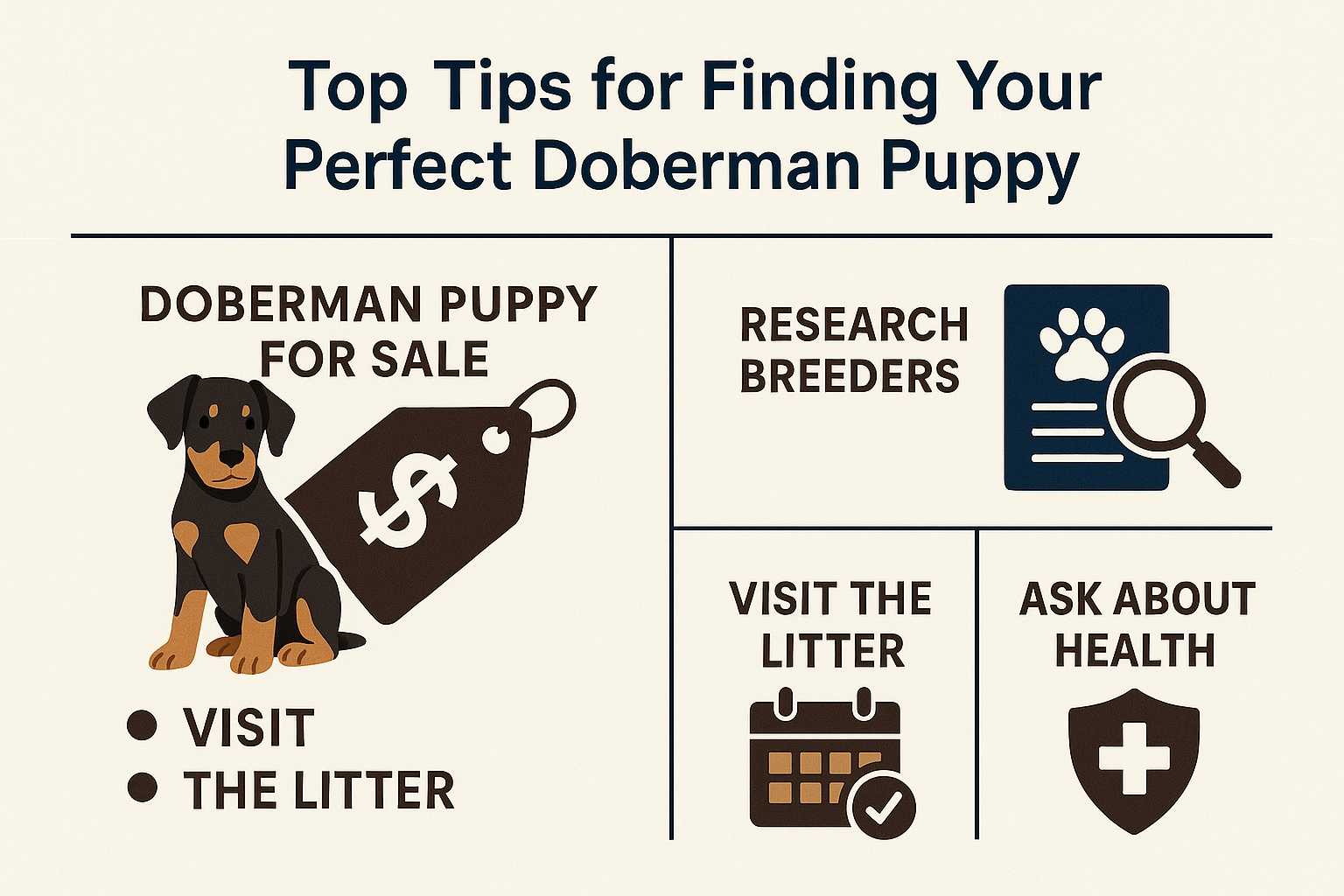
In this beginner-friendly guide, I’ll walk you through the top tips for finding the right pup and the right people to get them from. You’ll learn how to spot a responsible breeder (and avoid sketchy sellers), what health checks and paperwork actually matter, how to gauge a puppy’s temperament, and what early socialization should look like. We’ll also cover budget basics, how to prepare your home, and red flags to watch for online and in person. Think of this as your no-stress checklist to finding a healthy, happy Doberman that fits your lifestyle.
By the end, you’ll feel confident scrolling listings, asking smart questions, and saying “yes” to the puppy that’s truly meant for you. Let’s get you one step closer to those wiggly ears and wagging tail.
Understanding Doberman Puppy Costs
- Breeder prices: Expect $1,000–$3,500 from reputable breeders. The average sits around $1,500–$2,500, but ethically bred, show or working prospects often reach $3,000–$5,000, sometimes $6,000. Prices have climbed with demand and investment in health testing, especially for heart disease (Holter/echo). Start your search with AKC- or DPCA-connected breeders and ask for health clearances and contracts when searching for a doberman puppy for sale.
- Adoption is budget-friendlier at about $250–$800. Many rescues include spay/neuter, vaccines, and microchip in that fee, saving you upfront costs. It’s perfect if you want a companion rather than a show prospect. Check local shelters and breed rescues; be ready to apply and wait for the right fit.
- Three big drivers are breeder reputation, puppy traits, and location. Champion lines, stable temperaments, rare colors, or early training can add hundreds to thousands. Urban markets and cross-country delivery raise totals; trained pups available nationwide from Unique Dobermans show how logistics affect pricing. Compare itemized costs, ask about health guarantees and DCM screenings, and budget for first‑year care and insurance.
Decoding Reputable Breeders
- When you spot a doberman puppy for sale, look for DPCA and AKC membership as a quick credibility check. These ties signal a code of ethics and peer oversight. Reputable members often title dogs in conformation or sport, proving stable temperament. With 659,257 registrations logged from 1980–2001, clubs help filter noise.
- Demand health clearances. Ask for OFA numbers and copies of an annual echocardiogram plus a 24‑hour Holter for DCM, vWD DNA, hips, thyroid, and eyes. Serious kennels fund heart‑disease research and price accordingly, with ethically bred pups often $3,000–$5,000. Cross‑check averages using guides like average Doberman puppy costs.
- Visit the facility or request a live video tour. Expect clean whelping areas, enrichment, and confident, well‑socialized pups with the dam. Ask about socialization plans, vet records, returns, contracts, and microchips. Beware “cash now, no visit” sellers online.
Adoption Versus Buying
- Start with breed rescues before you chase a doberman puppy for sale. Use the DPCA Rescue directory, Petfinder, and local Doberman groups on Facebook. Expect an application, vet reference, home check, and a meet-and-greet. Ask for medical records, behavior notes, and if they offer a trial week.
- Adoption is usually cheaper: $250–$800 versus breeder prices of $1,000–$2,500+. Ethically bred prospects can reach $3,000–$5,000, sometimes more. Many rescues include vaccines, spay/neuter, microchip, and training advice, often $400+ in value. A $500 adoption that includes $450 in care can save hundreds. For comparison, see this Doberman Pinscher price guide.
- The emotional payoff is real, but so are the challenges. You may adopt a teen or adult needing decompression and structure. Ask about heart screening (Holter or echo), since Doberman heart health is a hot research focus. Join rescue alumni groups for support, and plan two weeks of calm settling-in.
Training Your Doberman Puppy
- Start early and stay consistent. Begin training the day your pup arrives with 5–10 minute sessions, 3–5 times daily. Reward sits, downs, name recognition, and calm crate time. Earning an AKC Canine Good Citizen basics ribbon is a goal. Whether adopted for $250–$800 or purchased for $1,500–$2,500+, consistency outperforms gadgets; some breeders (e.g., Unique Dobermans) offer trained pups.
- Match their energy wisely. Schedule 45–75 minutes, split between brisk walks, sniff-based enrichment, and short training games. Use “five minutes per month of age” for structured work to protect joints. With ethically bred pups at $3,000–$5,000, conditioning safeguards health. Ask about Holter and echo screening.
- Socialize like it’s your job. From 3–12 weeks, log two new people, one dog-safe outing, and a novel surface daily. Pair each with 10 treats for calm behavior. With 659,257 historical registrations, good manners prevent rehoming tragedies.
Health Considerations and Testing
1. Know the big genetic risks
DCM tops Doberman concerns and can be silent. von Willebrand disease, hypothyroidism, hip dysplasia, and Wobbler syndrome also occur. With 659,257 historical registrations (1980–2001), lines vary; pedigree research matters. Owners and breeders now fund heart-disease studies, sharpening screening.
2. Demand real health testing before you buy
AKC/DPCA breeders should provide OFA hips/elbows, a recent echocardiogram, and a 24‑hour Holter on both parents. Add thyroid panel, CAER eye exam, and DNA for vWD; DCM genes inform, not definitive. Ethically tested litters often cost $3,000–$5,000, reflecting that work. Adoption ($250–$800) may lack history—request full medical records.
3. Keep your puppy thriving
Choose a large-breed puppy diet for steady growth. Stay current on vaccines, deworming, and flea prevention. Limit jumping and hard fetch until 14–18 months. Add insurance, nail care, and early cardiac baselines.
Conclusion: Preparing for Your New Doberman Puppy
- Budget realistically: adoption $250–$800; breeder pups $1,000–$2,500+, with ethically bred prospects $3,000–$5,000 (occasionally $6,000). Expect $300–$600 for gear, $500–$1,200 first‑year vetting, $40–$80/month insurance, and $150–$300 for classes. Plan quality food for a fast‑growing athlete. Rising prices reflect demand and investments in ethical breeding.
- Training and health are non‑negotiable. Plan early socialization and consider a trainer ($80–$150/session). Require proof of vWD DNA, thyroid panels, OFA hips, and DCM screening (Holter/echo), repeated annually—a hot focus with breeder‑funded studies. Consistency now prevents behavior issues and expensive fixes later.
- Research like a pro. Use AKC and DPCA directories, compare three breeders, and verify contracts and return policies. If you spot a doberman puppy for sale labeled “trained,” demand curriculum, titles, and videos; reputable programs (e.g., Unique Dobermans) document everything. Trust red flags and walk away—you’ll thank yourself on pickup day.