
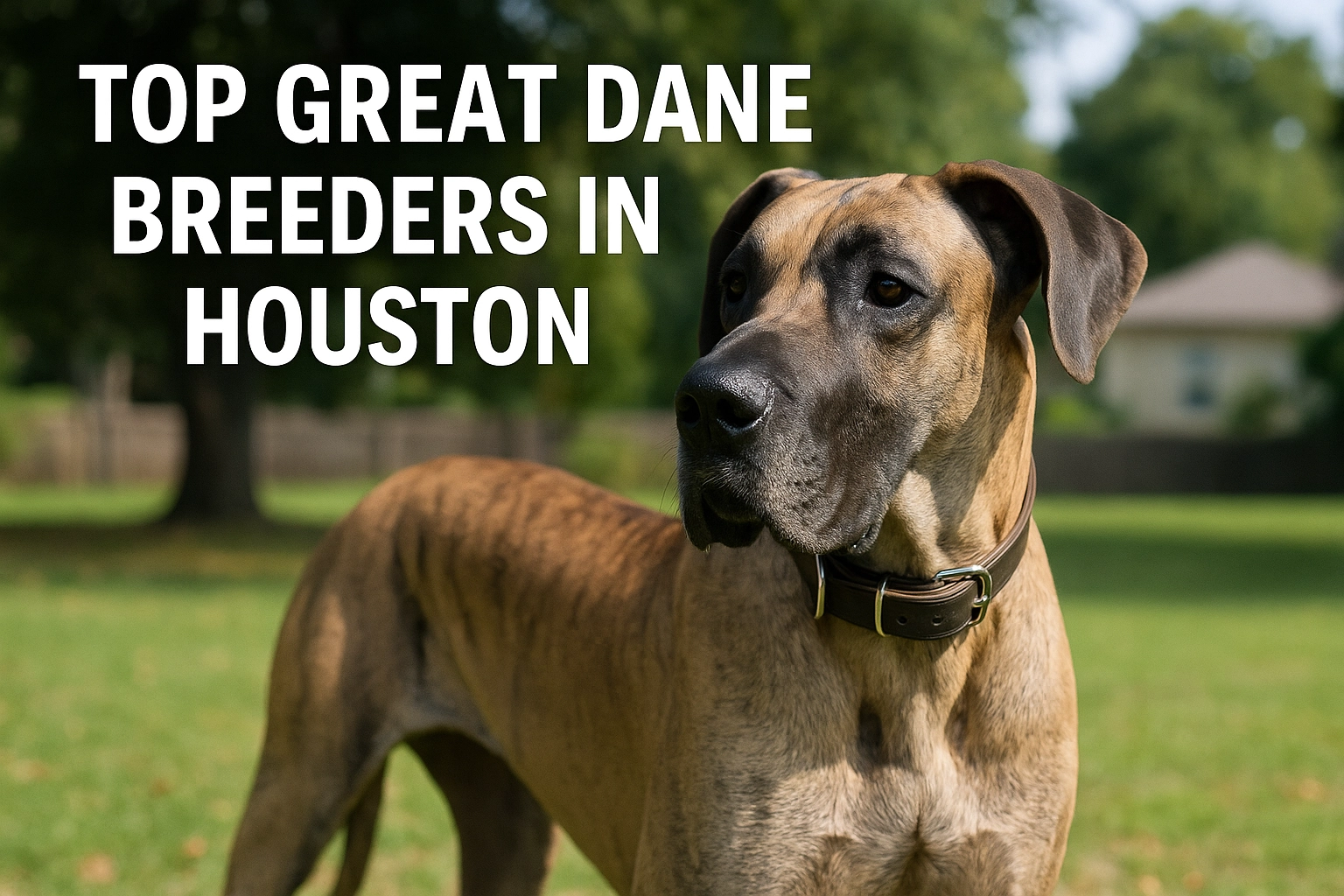
Thinking about bringing home a gentle giant? Choosing the right breeder will determine your Great Dane’s health, temperament, and support for years to come. In a market with glossy websites and big promises, you need clear criteria and verified facts to make a smart decision.
This list of top houston great dane breeders spotlights programs that put welfare first. We evaluated health testing rigor, including OFA and cardiac clearances, adherence to GDCA guidelines, sound temperaments through early socialization, transparent contracts, and lifetime breeder support. Each pick includes what they do best, typical wait times, expected pricing ranges, and how they handle placement, from companion homes to show prospects.
You will learn the questions that matter, which documents to request, and the red flags that signal you should walk away. You will also get practical tips on preparing for a giant breed, from space and training needs to insurance and nutrition. Whether you are seeking a steady family companion or a well-structured dog for conformation or performance, this guide gives you the confidence to choose wisely and the tools to advocate for a healthy, well-bred Dane.
Draggin Dobermans & Great Danes: A Premier Choice
1. 6-year health guarantee demonstrating commitment to longevity
An industry-leading 6-year health guarantee signals long-term accountability and confidence in the program’s genetics. Coverage focuses on serious, non-traumatic conditions often seen in large breeds, including hip dysplasia, cervical vertebral instability, dilated cardiomyopathy, and symptomatic von Willebrand disease. Prospective owners should review the guarantee terms in advance and plan proactive screening, such as a baseline cardiac evaluation in adolescence. This approach supports early detection and a better quality of life. Learn more about the breeder’s 6-year health guarantee.
2. Comprehensive health testing for multiple conditions
Breeding dogs are screened for hips, cardiac function, thyroid health, and known genetic risks like vWD and DCM before pairing. Robust protocols typically include OFA or equivalent hip evaluations, echocardiograms or Holter monitoring for heart assessment, and DNA panels to confirm clear or carrier status. Ask to see health certificates with microchip verification and ensure cardiac exams are recent, ideally within the last 12 months. Request copies for your records and your veterinarian’s continuity of care. Review the breeder’s comprehensive health testing program.
3. Focus on ethical breeding practices, including natural rearing protocols
Puppies are raised in-home with structured socialization, early neurological stimulation, and developmentally appropriate challenges that build resilience. Natural rearing practices, including raw feeding and low-stress husbandry, support robust digestion and immunity when applied thoughtfully. Owners receive guidance to transition diets gradually and to continue safe exposures during the 8 to 16 week window. Keep sessions short, pair new experiences with rewards, and track progress. Explore their natural rearing protocols.
4. Lifetime support for training, health, and behavioral questions
Lifetime breeder support gives families a knowledgeable partner from puppyhood through senior years. Expect coaching on crate training, house manners, enrichment, and age-appropriate exercise for a giant breed. Schedule touchpoints after pickup at 48 hours, 2 weeks, 6 months, and 1 year to review growth, diet, and behavior. Use positive reinforcement methods and contact the breeder promptly if new fears or reactivity emerge.
5. Limited breeding program emphasizes strong temperament
A selective breeding plan prioritizes stable, confident temperament and longevity over volume. Litters are evaluated for startle recovery, human focus, and adaptability to novel surfaces, which helps match puppies to suitable homes. During selection, observe the dam’s sociability and recovery after stimuli, and discuss lineage temperament trends. For families researching Houston Great Dane breeders, this measured approach results in companions that are biddable, resilient, and easier to integrate into busy households.
Understanding the Importance of Health Guarantees
- Minimize long-term veterinary costs A written health guarantee protects new owners from expensive surprises. Large-breed issues such as hip dysplasia can require imaging, lifelong supplements, or surgery that may run into thousands of dollars. Clear language covering hereditary and congenital conditions reduces financial risk and stress. Ask for a detailed guarantee before placing a deposit and confirm coverage timelines, remedies, and exclusions. For context on how guarantees offset future costs, see why a health guarantee matters.
- Proof of ethical breeding standards Guarantees backed by documented screenings show a breeder prioritizes health and welfare over convenience. Ethical programs pair testing with selective matings, limited breeding frequency, and full transparency about results. Request proof of orthopedic certifications, cardiology evaluations, thyroid panels, and DNA findings with registered IDs. This aligns with the ASPCA’s criteria for responsible breeding, which emphasize health, temperament, and informed placements.
- What robust screening should include For Great Danes, buyers should expect orthopedic evaluations for hips, cardiac screening by a board-certified cardiologist, full thyroid panels, and genetic testing such as von Willebrand disease status. Verify the type of test and who performed it, for example, echocardiogram rather than only a general exam, and the date the results were issued. Ask for copies of certificates and lab reports, not summaries. Comprehensive testing, documented in writing, is the backbone of a meaningful guarantee.
- How guarantees influence purchasing decisions Clarity and completeness in a contract are strong decision drivers for families comparing Houston Great Dane breeders. Look for plain-language remedies, replacement or refund options, and support provisions if a condition emerges. Confirm owner obligations such as nutrition, veterinary checkups, or training that keep the guarantee valid. The AKC outlines what to review in breeder contracts, helping buyers make confident choices.
- Draggin’s transparent approach Draggin Dobermans & Great Danes advocates clear, written guarantees paired with comprehensive health testing and lifetime owner support. Our 6-year guarantee reflects long-term accountability and confidence in temperament and longevity. We share test documentation proactively and invite questions about protocols and results. This level of transparency helps buyers understand coverage, evaluate risk, and move forward with assurance.
Natural Rearing: A Holistic Approach
- Raw feeding is on the rise among Great Dane owners in Houston. More families are shifting to species-appropriate meals that include muscle meat, edible bone, and secreting organs in roughly an 80-10-10 ratio. For giant-breed puppies, prioritize a calcium to phosphorus ratio near 1.2:1 and steady growth, not rapid weight gain. Transition over 7 to 10 days to reduce digestive upset. Track stool quality, skin condition, and energy to fine tune proteins.
- Minimizing chemicals supports whole-dog health. Replace routine pesticide collars with integrated pest management, yard control, frequent checks, and targeted treatments as needed. Use fragrance-free cleaning agents, diluted vinegar solutions, and stainless or glass food bowls to limit endocrine disruptors. Discuss titer testing with your veterinarian to avoid unnecessary boosters while maintaining legal compliance. Keep deworming and heartworm prevention tailored to exposure risk, not automatic schedules.
- A resilient immune system can mean fewer vet visits over time. Fresh diets improve microbiome diversity, which is linked to better digestion and skin health. Lower cumulative chemical load may reduce sensitivities that trigger recurrent ear and GI issues. Owners often report cleaner teeth, lean body condition, and faster post-exercise recovery. Document outcomes in a health journal to catch patterns and adjust early.
- Draggin Dobermans & Great Danes integrates natural rearing within a limited, ethics-first program. Puppies are raised on raw nutrition, early socialization, and low-toxicity protocols that complement comprehensive health testing. The team pairs education with lifetime support so owners can implement these practices confidently. This alignment with temperament and longevity goals helps families plan for each developmental stage.
- The payoff is longevity and robust day-to-day health. Expect glossy coats, steady musculature, strong dentition, and sustained mobility into senior years. Combine natural rearing with measured exercise, slow-feed bowls, and meal spacing to reduce bloat risk. For families comparing Houston Great Dane breeders, these outcomes represent practical, trackable benefits that compound across a dog’s lifetime.
The Role of Lifetime Support for Puppy Owners
- Lifelong reassurance and guidance. For families comparing Houston Great Dane breeders, lifetime support means you are never on your own after pickup. Expect prompt answers as your puppy moves through key phases, teething, adolescence, and adulthood, when questions about growth, GI sensitivity, or exercise limits arise. A responsive breeder helps you triage what needs a vet visit versus what can be managed at home, reducing stress and costs. Actionable tip: schedule touchpoints at 3, 6, and 12 months, then annually, and keep a simple training and health journal to track progress and questions.
- Integrated health, behavior, and training assistance. Robust programs connect the dots, from comprehensive health testing to day‑to‑day behavior shaping. Draggin backs puppies with a 6‑year health guarantee and breeds from dogs screened for hips, cardiac, thyroid, and von Willebrand disease, reinforcing a health‑first foundation that supports training success. Owners receive guidance on socialization targets, crate routines, and positive reinforcement methods tailored to giant breeds. Actionable tip: map a 12‑week socialization checklist and keep exercise low‑impact until growth plates close, focusing on manners, recall, and cooperative care.
- Access to experienced professionals who know the breed. Direct lines to a breeder who lives with the breed daily, and can refer you to Dane‑savvy veterinarians, trainers, and nutrition consultants, accelerates problem solving. You benefit from pattern recognition built over many litters, for example quick identification of growth‑related limping or stress signals in adolescents. Learn about Draggin’s philosophy and contact pathways via their program overview. Actionable tip: assemble a vetted support roster at pickup, primary vet, emergency clinic, trainer, insurance, and breeder contacts.
- A measurable boost to longevity and quality of life. Ongoing guidance supports lean body condition, joint protection, and early detection of cardiac or orthopedic concerns, all critical in giant breeds. Owners are coached on meal structure, pacing, and rest to reduce bloat risk, plus routine cardiac screening schedules as adults. Simple habits matter, monthly resting heart rate checks, gait videos for comparison, and weight tracking to catch trends early. Actionable tip: target a body condition score of 4 to 5 out of 9, and review logs with your breeder at each check‑in.
- At Draggin, support extends well beyond the purchase. Expect educational packets, proactive check‑ins, and a responsive line for health, behavior, and training questions throughout your dog’s life. Community touchpoints, photo updates, and progress reports create accountability and faster solutions when challenges appear. Actionable tip: share growth photos monthly during the first year and consult Draggin before making major diet or training changes, aligning your decisions with the program’s health and temperament goals.
Ethical Practices in Breeding Great Danes
1. Alignment with the Great Dane Club of America’s Code of Ethics
Ethical programs follow the GDCA Code of Ethics, which prioritizes health, temperament, and sound structure. It requires clean, safe facilities and the breeding of dogs that conform to the standard. It also discourages sales to brokers or raffles and promotes screening homes for readiness. Ask breeders to show how they comply, including written contracts, owner education, and proof of ongoing welfare commitments.
2. Responsible breeding limits preserve breed integrity
Limiting litter frequency protects dams and reduces genetic drift. Best practice is at least one heat between litters, often 10 to 12 months, with veterinary clearance before repeating. Lifetime litter counts should be conservative and individualized, with retirement based on health metrics, not demand. Request whelping records, dam recovery notes, and the program’s retirement policy to verify responsible pacing.
3. Ensures puppies have good temperament and health
Comprehensive screening, hips, cardiac, thyroid, and von Willebrand disease, narrows risk before breedings occur. Structured socialization, such as early neurological stimulation and age appropriate exposure, develops stable, family safe temperaments. Veterinary oversight, parasite control, and vaccination planning complete the baseline. Ask to review test certifications, cardiac echo reports, and a week by week socialization log before reserving a puppy.
4. Draggin’s commitment to ethical standards sets an industry benchmark
Draggin in Houston couples a limited breeding program with champion, health tested lines and selection for calm, confident temperaments. The program backs puppies with a 6 year health guarantee and conducts hips, cardio, thyroid, and vWD testing across breeding stock. Natural rearing protocols, including careful nutrition and minimal chemical load, aim to enhance resilience. Litters are spaced responsibly and placements are individualized through careful owner screening.
5. Key to fostering customer trust
Ethics become visible through transparency and follow through, which matters when families evaluate Houston Great Dane breeders. Provide clear documentation, health results, and rationale for each pairing, before deposits change hands. Offer lifetime access to guidance on nutrition, training, and behavior, supported by documented check in milestones. Track outcomes and invite owner feedback to continuously refine the program and maintain accountability.
Conclusion: Choosing the Right Breeder
- Verify health guarantees and testing standards. Ask for a written, multi-year guarantee and copies of health clearances for hips, cardiac, thyroid, and von Willebrand disease. You can review Draggin’s testing scope on the AKC Marketplace profile, then confirm OFA and echocardiogram documentation for the exact parents.
- Evaluate ethics and reputation. Look for transparent contracts, limited and purpose-driven breeding, and documented prioritization of temperament and longevity, supported by show titles or performance results. Speak with recent puppy families and local trainers, and ask how the breeder handles returns or rehoming.
- Prioritize lifetime support. Clarify response times, preferred channels, and what help is included for training, nutrition, and health decisions. Draggin publicly commits to ongoing guidance, as outlined in this lifetime support overview.
- Check fit for your household. Discuss activity level, size expectations, natural rearing preferences, and handling experience so placement aligns with your goals. Request temperament testing results and a sample week of the breeder’s routine.
- The bottom line for Houston Great Dane breeders. Draggin Dobermans & Great Danes remains a leader through comprehensive testing, an industry-leading 6-year guarantee, natural rearing, and ongoing mentorship. That combination sets you up for a healthy, well-matched companion.