
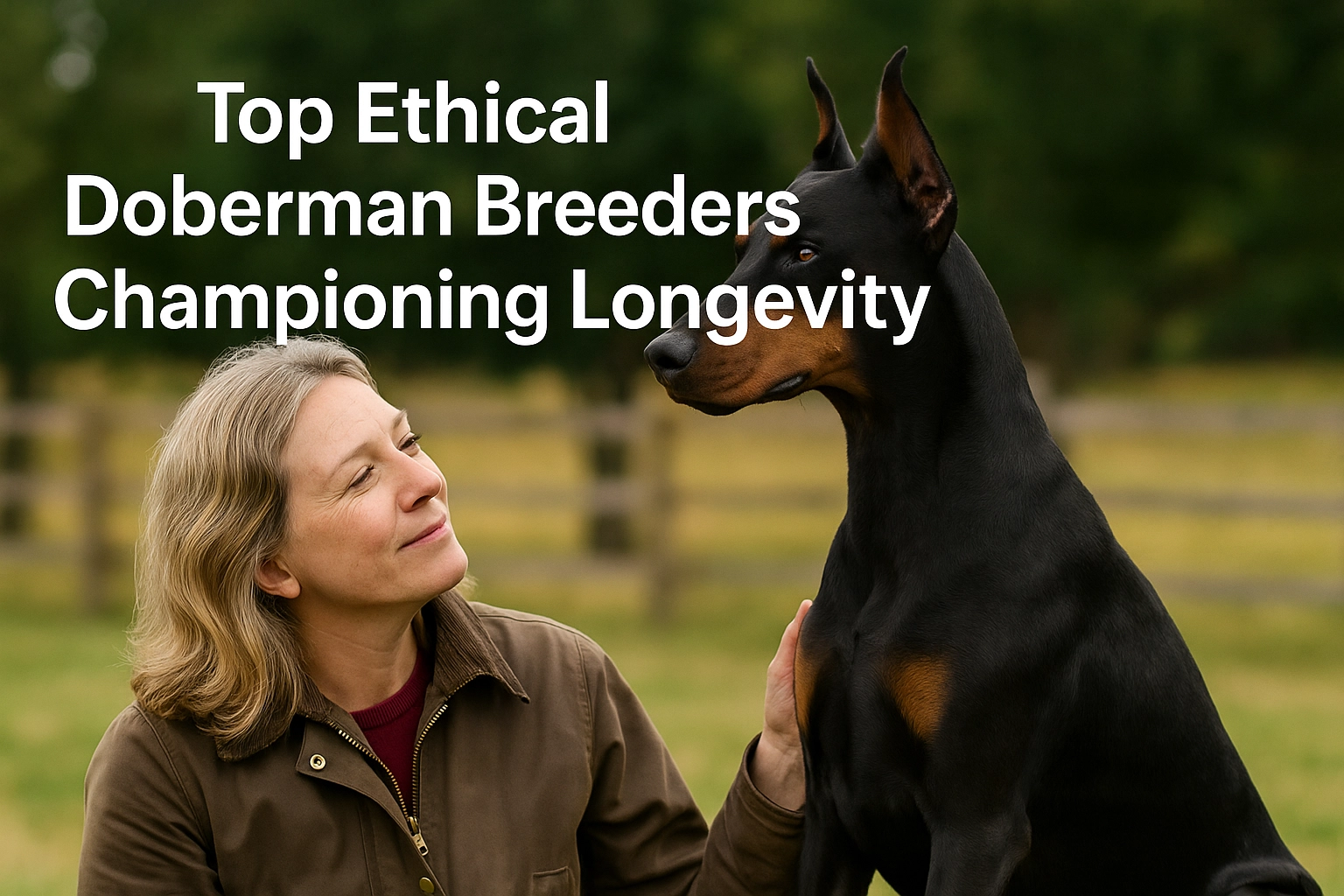
Thinking about bringing home a Doberman but worried about heartbreaking health issues and short lifespans? You are not alone. The good news is that ethical doberman breeders are working hard to change the story, prioritizing health, temperament, and longevity so your future best friend can thrive for years.
In this list, we will spotlight top breeders known for transparent health testing, smart pairing strategies, and long term support for their puppies. You will learn what real commitment to longevity looks like, from screening for DCM and hip health to tracking offspring over time. We will share the questions to ask before you join a waitlist, the documents you should expect to see, and the red flags that suggest you should keep looking. Each profile will include what sets the program apart, how they socialize puppies, and how they support new owners.
Whether this is your first purebred dog or your first Doberman, this guide will help you choose with confidence. By the end, you will know how to evaluate claims, verify results, and find a breeder who puts the dog’s future first.
Deciphering Ethical Breeding in Dobermans
- Prioritize health with real testing and responsible COI Start with health before anything else. Ethical Doberman breeders share full panels up front, including DNA for von Willebrand’s disease, annual Holter plus echocardiogram for dilated cardiomyopathy, OFA or PennHIP for hips and elbows, and a thyroid panel; this [reputable breeder checklist](https://www.wonderdoberman.com/2025/08/15/find-reputable-doberman-breeder/) summarizes the basics. Embark offers 8 breed specific genetic tests, and the DPCA cites typical vWF antigen values of 70 to 180 percent as normal, so ask to see actual lab reports. Request the projected litter’s Coefficient of Inbreeding and choose programs that keep COI under 10 percent, ideally under 5 percent, to protect genetic diversity and longevity.
- Select for temperament that fits real family life Temperament is the foundation of a safe family companion. Look for breeders who temperament test at 7 to 8 weeks, then place puppies based on confidence, recovery from startle, and sociability rather than color or size. Ethical programs socialize pups with everyday noises, car rides, children, and friendly adult dogs, and begin crate, leash, and handling work. Natural rearing choices, such as fresh raw inclusive diets and low stress husbandry, are used by some breeders to support resilience and clear heads.
- Expect long term guarantees and lifetime support Long term guarantees show a breeder’s confidence in their program. Some kennels offer 1 year and others 3 to 5, while standouts like Draggin.net in Houston, TX back puppies with a 6 year health guarantee that spells out coverage for serious hereditary conditions. Read the contract carefully, note how claims are handled, and confirm whether refunds or replacements apply for issues such as DCM, crippling hip dysplasia, or congenital defects. Ask how the breeder tracks outcomes, for example DPCA Longevity Certification for dogs reaching 10 years, and what support they provide throughout your dog’s life.
Natural Rearing and Raw Feeding: The Preferred Choice
1) Choose human-grade meats and add smart supplements
For natural rearing to work, quality matters. Human-grade meats are processed to higher safety standards and avoid the fillers, sugars, and artificial preservatives common in kibble. Breeders practicing natural rearing report better muscle tone, stronger bone formation, and steadier temperaments when they eliminate synthetic additives, as noted by Stronghold German Shepherds. For beginners, start with clean proteins like turkey, beef, or sardines, and add balance with omega-3s (fish oil or whole sardines), vitamin E, manganese-rich green-lipped mussels, and a broad-spectrum probiotic. Ask doberman breeders for a written supplement schedule and sourcing list so you can maintain consistency at home.
2) Understand the benefits, then build a safe raw plan
Raw feeding often delivers visible results. Owners commonly see shinier coats, cleaner teeth from chewing meaty bones, smaller and less odorous stools, and steady energy from bioavailable proteins and fats. For growing Dobermans, correct calcium to phosphorus ratios near 1.2:1 and thoughtful protein rotation support bone density and lean mass. There are risks if the diet is imbalanced or handled unsafely, including bacterial contamination and nutrient gaps, so partner with a veterinary nutritionist and follow strict food safety. For a clear overview of cautions and best practices, review Doberman raw diet risks, then build your plan step by step.
3) See how Draggin.net aligns with holistic puppy development
At Draggin.net in Houston, our limited breeding program for champion Dobermans and Great Danes pairs comprehensive health testing with natural rearing, raw-first nutrition, and a 6-year health guarantee. Puppies transition on species-appropriate meals, gentle enrichment, and low-chemical environments, all chosen to support temperament and longevity. Our protocols mirror principles championed by the Natural Rearing Breeders Association, which encourages raw diets and mindful, minimal chemical use in collaboration with your vet, see Natural Rearing Breeders. New families receive a detailed feeding transition plan, safe-handling instructions, and local Houston suppliers for human-grade meats. When you interview doberman breeders, ask for their raw menu, sanitation steps, and how they adjust portions for growth, so your puppy thrives from day one.
Understanding Genetic Health Testing
1) Key genetic tests every Doberman needs
Start with heart genetics. Dobermans should be DNA tested for DCM1, PDK4, and DCM2, TTN, since carrying both mutations increases risk for Dilated Cardiomyopathy, and about 40 percent of DCM1 carriers may develop disease according to NC State’s interpretation guide. Pair DNA with annual cardiac screening, 24-hour Holter and echocardiogram, beginning around 2 years to catch silent changes early. Run a von Willebrand’s disease DNA test and, when available, correlate with vWF antigen, 70 to 180 percent is considered normal in Dobermans, plus basic clotting history. Round out screening with OFA or PennHIP hips, OFA eye exams by a board-certified ophthalmologist, and OFA thyroid panels, as outlined in this breeder-facing checklist from Benchmark Dobermanns. Action step: ask doberman breeders to share full DNA reports, OFA numbers, and cardiac results dated within the past 12 months.
2) Why thorough health checks change outcomes
Comprehensive testing lets breeders avoid risky pairings, for example not doubling up on DCM2 carriers, which lowers the chance of affected puppies. Early detection improves daily care, from tailored exercise plans to supplements and cardiology follow up that can delay progression. It also saves money over time by preventing crisis care and guiding smart insurance choices. Big picture, transparent testing supports healthier lines and improves odds of reaching the DPCA Longevity Certification at age 10 and beyond. Action step: create a simple health file for your puppy with DNA summaries, Holter dates, and reminders for annual screenings, then share it with your veterinarian.
3) Draggin Dobermans’ screening you can verify
Draggin Dobermans in Houston, Texas, sets a high bar with comprehensive panels on breeding dogs, cardiac evaluations, and orthopedic, eye, and thyroid clearances you can see before you reserve. They pair genetics with responsible selection for temperament and structure, then support families through natural rearing protocols that complement long-term wellness. Puppies are home raised and come with lifetime guidance, a strong indicator that the breeder stands behind their program. Most notably, Draggin offers a 6-year health guarantee on genetic conditions, a rare safety net that reflects confidence in their results. Action step: request sample contracts and recent parent health packets, including DNA for vWD, DCM1 and DCM2, OFA certificates, and the most recent Holter and echo reports.
Breeding for Longevity: A Promising Future
1) Manage COI to stack the odds for a longer life
The coefficient of inbreeding, COI, estimates how genetically similar a mating pair is, and keeping it low helps curb inherited disease. In Dobermans, DCM is the big threat, with estimates that more than 60 percent of the breed is lost to it, so diversity matters DCM overview. Ask for a genomic or 10-generation COI on every proposed pairing and favor litters below the breed average. Many programs lower COI by blending European working and American show lines, which can maintain type while boosting heterozygosity, see low COI pairing examples.
2) Look for proof: Longevity Certification and BFL lines
The Doberman Pinscher Club of America recognizes seniors with a Longevity Certification, LC, at 10 years or older, and flags pedigrees Bred for Longevity, BFL. BFL-1 means both parents are longevity certified, and BFL-2 means both parents and all four grandparents earned LC, which adds real depth to a pedigree. As of 2021, more than 4,500 Dobermans hold LC status, a practical data point for families comparing lines. Ask breeders to show LC certificates, BFL notations, and introduce you to living 10 to 12 year relatives by visit or video.
3) Draggin.net example: transparent testing and natural rearing
At Draggin.net in Houston, our limited program focuses on longevity, temperament, and sound structure, backed by a 6-year health guarantee. Every sire and dam completes OFA orthopedic, thyroid, eye, and cardiac screening, including echocardiogram and 24 hour Holter, with results shared up front health and breeder tips. We pair for lower COI and raise puppies with natural rearing, fresh raw components and minimal chemicals to support resilient immunity. If you are comparing doberman breeders, ask us for COI reports, sample BFL pedigrees, and introductions to long lived relatives so you can see the program in action.
Temperament Matters: More Than Just Looks
1) Put temperament first when choosing a family Doberman
A Doberman’s striking outline is only part of the story; the day to day experience comes from temperament. Look for puppies raised with systematic socialization, including new people, surfaces, sounds, and gentle handling, because confident exposure reduces the risk of over-guarding. Reputable doberman breeders can explain their socialization plan and share results from temperament evaluations around seven weeks, such as startle recovery and ability to settle after play. Families should also ask to meet stable adult relatives, since calm, biddable temperaments often run in lines. Experts emphasize that early socialization and consistent training help channel natural protectiveness into good judgment, creating reliable companions for children and guests, a point echoed in this practical overview of Dobermans as family dogs and in Houndsy’s guide to Doberman temperament.
2) How Draggin.net balances health, temperament, and looks
Draggin Dobermans in Houston builds temperament on a foundation of health and thoughtful rearing, then polishes the picture with correct structure and aesthetics. Their puppies are home raised for real-world exposure, which means household noises, car rides, and visitor interactions are part of early life. The program prioritizes comprehensive health testing, including breed-specific DNA panels that responsible breeders use to stack the odds for sound bodies and minds, and combines this with natural rearing that supports resilience. This holistic approach is backed by a 6-year health guarantee, a strong signal of confidence in both longevity and stable behavior. Limited, selective breedings focus on clear-headed, confident dogs that can earn titles and still excel as family companions. You can see their philosophy outlined on Draggin Dobermans’ About page.
3) The payoff of a well-adjusted Doberman at home
When temperament is prioritized, you get a dog that bonds deeply, alerts appropriately, and relaxes with the family between activities. Daily life feels easier with a Doberman that can switch from a brisk neighborhood walk to a calm settle on a mat while kids do homework. Their intelligence makes five-minute training sessions twice a day incredibly effective, and puzzle feeders or scent games channel energy into learning. Confident dogs travel better, handle vet and groomer visits with less stress, and integrate smoothly with visiting relatives or playdates. The long-term benefit is a safer, happier home and a companion you can take almost anywhere.
The Draggin.net Advantage: Leading the Pack
1) A 6-year health guarantee that actually means peace of mind
When you compare Doberman breeders, Draggin.net’s 6-year health guarantee stands out. It covers non-traumatic hip dysplasia, cervical vertebral instability Wobbler, dilated cardiomyopathy DCM, and symptomatic von Willebrand’s disease. Non-traumatic means issues that are genetic or developmental, not caused by an accident, which is what you really want a guarantee to address. Most breeder warranties last 1 to 2 years, so six years signals long-horizon confidence in their program. Action step: ask to see the contract, how diagnoses are made, what portion of costs are reimbursed, and whether a second opinion or necropsy is required.
2) Focused breeding practices that put health and ethics first
Ethical breeding shows up in the day to day, not marketing. Draggin.net runs a limited program in Houston, Texas, pairing champion Dobermans and Great Danes with comprehensive screening, including DNA panels for DCM variants and vWD, plus structural and cardiac evaluations. Puppies are home raised with Puppy Culture style socialization, household sounds, and early problem-solving, which supports stable temperaments for families. Their natural rearing approach prioritizes clean nutrition and low-toxicity routines, often including raw feeding and targeted supplements, consistent with the growing holistic trend among responsible breeders. Practical tip: request test summaries for each parent, including vWF antigen values in the normal 70 to 180 percent range, plus the eight Doberman genetic results from major labs, then match those to the pedigree.
3) Why Draggin.net ranks at the top for Dobermans and Great Danes
All of this is why Draggin.net tends to top ethical breeding shortlists. They combine champion bloodlines with transparency, publish clear health policies, and provide lifetime owner support, which is what first-time families need. Their focus on longevity fits the Doberman community’s push to celebrate dogs living 10 years and beyond, and they select pairings with that outcome in mind. For you, that means straightforward communication before pickup, a starter plan for feeding and training, and a real person to call if questions pop up months later. If you are comparing options, visit, meet the dogs, review testing folders in person, and notice how confidently the breeder discusses temperament, structure, and long-term health.
Conclusion: Choosing the Right Breeder for Your Family
- Choose ethics and transparency first. A responsible Doberman breeder welcomes your questions and shares proof, not promises. Ask to see completed genetic panels, including the 8 breed‑specific tests many use through Embark, plus cardiac screening like echocardiogram and 24‑hour Holter results. Request von Willebrand’s factor data, normal for Dobermans is typically 70 to 180 percent, and review a low COI to support genetic diversity. Ethical programs also invest in early socialization and natural rearing, for example balanced raw feeding and holistic wellness, which many breeders report helps immunity and overall resilience. Bonus points if the kennel participates in longevity tracking or celebrates Dobermans reaching 10 years with a Longevity Certification.
- Look for strong guarantees and an ethical pedigree. A lifetime health guarantee is ideal, but at minimum seek a lengthy, clearly written contract, some breeders offer six years, that covers hips, cardiac disease, and hereditary conditions. Pair that with a transparent pedigree, ancestors with health clearances, stable temperaments, and proven structure, whether American or robust European lines. This combination reduces future vet costs, improves trainability for families, and raises the odds of a longer, healthier life. Action step: ask for the contract before you place a deposit and verify health clearances on parents and grandparents.
- Ready for a champion‑caliber family partner. Contact Draggin.net in Houston for puppies from a limited, ethical program focused on temperament and longevity, comprehensive health testing, natural rearing, and a standout 6‑year health guarantee. Join the waitlist, schedule a visit, and let their team help match you with the right Doberman for your home.