
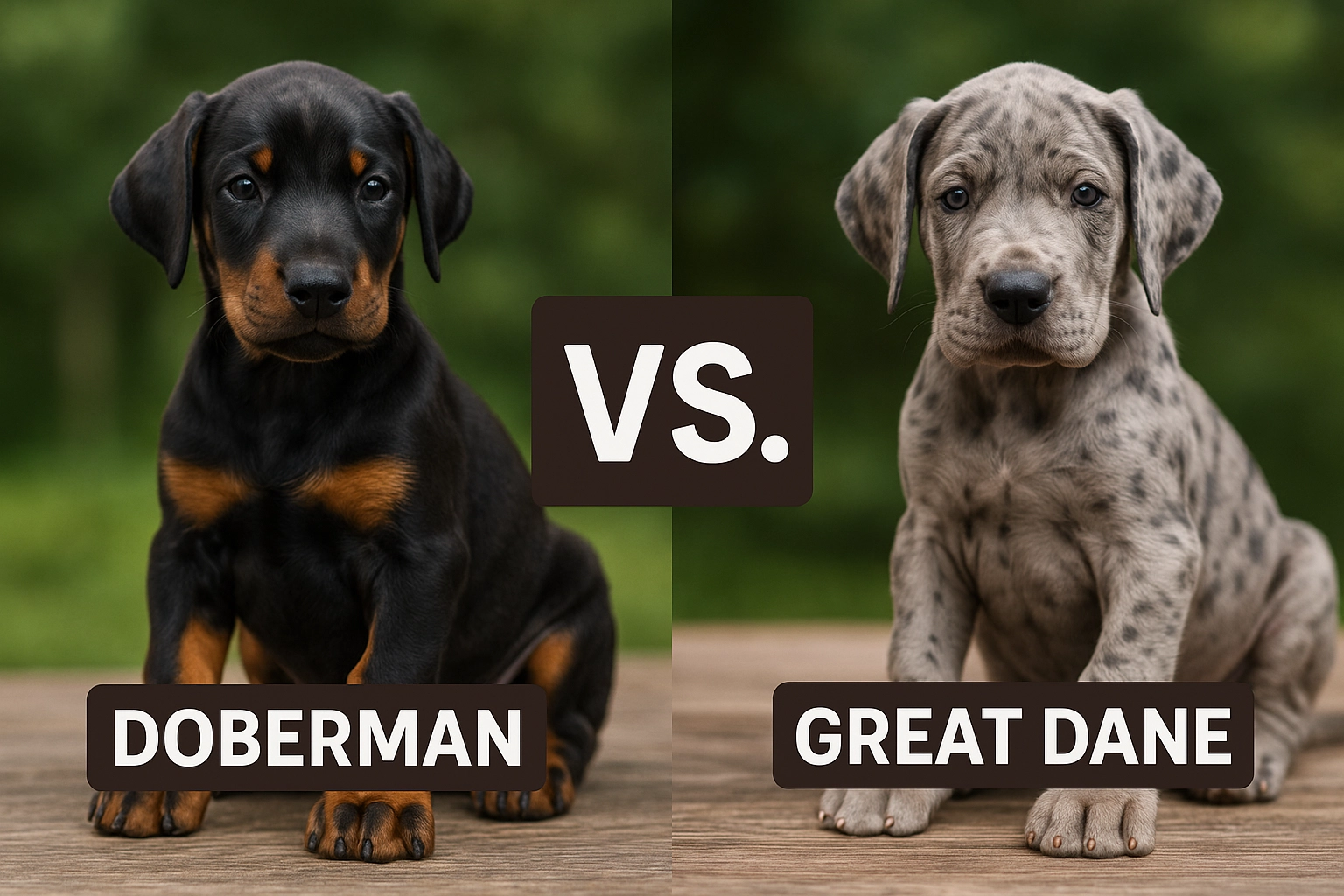
Thinking about bringing home a big pup, but not sure which breed fits your life? Two popular choices often top the list, the sleek, watchful Doberman and the towering, gentle Great Dane. Both are lovable. They are very different in day to day life, especially as puppies.
In this beginner friendly comparison, we will look at doberman great dane puppies side by side. You will learn how they differ in size and growth, energy levels, training needs, social temperament, grooming, health considerations, and costs. We will talk about space requirements, what to expect in the first year, and the kind of families each pup thrives with. By the end, you will know if you want a high drive training partner, or a couch cuddler with a giant heart. We will share simple tips for choosing a reputable breeder or rescue, and a quick checklist to help you decide with confidence.
Understanding Key Comparison Criteria
Temperament, size, and lifespan: side-by-side essentials
If you are comparing Doberman Great Dane puppies, start with daily life fit. Dobermans are intensely loyal, quick to learn, and naturally vigilant. They thrive with structured training and regular mental work, which is why they are widely noted for alertness and responsiveness see breed overview. Great Danes are famously gentle, people oriented, and generally easier going, making them lovely family companions when you want a calmer demeanor. In terms of size, Dobermans typically stand 24 to 28 inches and weigh 60 to 100 pounds, while Great Danes often reach 28 to 32 inches and 110 to 175 pounds, which affects housing, travel, and veterinary costs compare typical measurements. Lifespan is another key difference. Dobermans usually average 10 to 12 years, whereas Danes commonly live about 7 to 10 years, which is a meaningful planning factor for families read a concise breed comparison.
Health testing and ethical breeding practices
Both breeds have breed specific risks. Dobermans are predisposed to dilated cardiomyopathy and von Willebrand disease. Great Danes face higher odds of hip dysplasia, bloat, and heart disease. An ethical program screens breeding dogs with hip evaluations, cardiac echocardiogram or Holter monitoring, thyroid panels, and DNA for clotting disorders. Practical tip: ask for OFA or equivalent hip results, the most recent cardiac report, and DNA certificates. Modern tools can help, such as comprehensive DNA screens that analyze 400 plus breeds or panels with more than 300 health markers, but results should be interpreted by a knowledgeable breeder and veterinarian. A strong indicator of accountability is a robust written health guarantee. For example, a 6 year health guarantee signals confidence in both genetics and husbandry.
How natural rearing supports health and longevity
Natural rearing focuses on a species appropriate diet, reduced chemical exposures, thoughtful vaccination schedules, and rich environmental socialization. For giant breeds like the Great Dane, careful nutrition and slow, steady growth can support joints and reduce stress on developing frames. For active Dobermans, balanced raw or fresh feeding and low toxin routines can support heart and thyroid health when guided by a veterinarian. Action items: confirm diet plans, ask about vitamin and calcium balance for growth, request written vaccination and parasite protocols, and ensure gradual exercise increases. When combined with selective breeding and transparent testing, these husbandry choices can help puppies enter your home resilient and ready to thrive.
Doberman Puppies: Temperament and Health Insights
Temperament snapshot you can live with
Doberman puppies are famously people centered, which is why they bond fast and stay close. Expect a vigilant shadow that learns routines quickly, reads your cues, and steps between you and uncertainty with calm confidence. Their loyal and protective nature is paired with athletic energy, so daily mental games and structured exercise matter. Families often report that a well socialized Doberman is gentle with kids and tuned in to household rhythms. For a deeper temperament profile, including traits like alert, fearless, and obedient, see this overview from UC Davis Veterinary Genetics Laboratory Doberman temperament and diversity overview. If you are comparing doberman great dane puppies, this clarity helps decide whether you want a vigilant training partner or a more laid back giant.
Health risks and testing, made simple
Heart health is the headline issue in Dobermans. Dilated cardiomyopathy can impact roughly 50 percent of the breed over a lifetime according to the AKC Doberman DCM risk discussion. Beginner friendly checklist: ask for a recent 24 hour Holter monitor report, an echocardiogram by a board certified cardiologist, and clear documentation of von Willebrand disease DNA status, thyroid panel, and hip evaluations. Annual Holter and echo for breeding dogs is the gold standard, and many owners repeat Holters each year for peace of mind. The DPCA explains why yearly cardiac screening and careful breeder selection matter Buying a Doberman, health screening basics. Genetic screens for DCM1 and DCM2 are useful context, but they do not replace cardiac imaging and rhythm monitoring.
How our 6 year guarantee supports longevity
At Draggin Dobermans & Great Danes in Houston, every planned litter sits inside a longevity program that starts before conception. Parents complete comprehensive testing for hips, cardio, thyroid, and von Willebrand disease, then puppies follow age appropriate cardiac checkups and structured socialization. Our 6 year health guarantee reflects this process, rewarding owners who keep up with annual Holter and veterinary wellness visits. We also share natural rearing protocols, including nutrition guidance and stress light early training, to support heart and immune health. If you are weighing Doberman versus Great Dane, this same transparent framework lets you compare care plans, not just cute faces, as you move to the next section.
Great Dane Puppies: Characteristics and Care
The gentle giant in daily life
If you are comparing doberman great dane puppies, Great Danes bring a softer, more easygoing energy to the home while still turning heads with their size. Males often reach 30 to 32 inches at the shoulder and 140 to 175 pounds, with females a bit smaller, so early manners like polite leash walking and sit-stay at doorways are essential. Families love that Danes are people focused, affectionate, and typically patient with children when supervised. Daily needs look like two moderate walks, play sessions that do not involve hard jumping, and plenty of couch time. For a quick breed snapshot on size and temperament, see this overview from Great Pet Care and AKC’s primer on their “gentle giant” reputation here.
Health evaluations you should expect
Because large-breed joints and hearts work hard, health testing is non negotiable. The Great Dane Club of America calls for hip x rays before breeding, and ethical programs add elbows, thyroid panels, and cardiac screening with echocardiogram and often a 24 hour Holter. Draggin Dobermans & Great Danes completes comprehensive testing for hips, cardio, thyroid, and von Willebrand disease, backed by a 6 year health guarantee. For puppies, ask for copies of parental OFA or PennHIP results, cardiac reports, and DNA for bleeding or clotting disorders. Plan lifelong bloat prevention with two to three smaller meals, slow feeders for gulpers, rest before and after meals, and a discussion with your vet about prophylactic gastropexy at spay or neuter. AKC estimates a 7 to 10 year lifespan, so preventive care pays off.
Natural rearing with Draggin.net, practical benefits
Natural rearing at Draggin.net centers on species appropriate nutrition, thoughtful vaccination protocols, and low stress husbandry to support steady growth and longevity. In practice, that can mean raw or gently cooked diets formulated for large breed puppies, careful calcium to phosphorus balance, and body condition kept lean during the first 18 months. Owners who prefer high quality kibble can still adopt natural rearing principles by choosing large breed formulas, splitting into multiple meals, and adding fresh toppers like sardines or kefir. Titer testing helps time vaccines and may reduce unnecessary boosters, while holistic supports like probiotics and joint friendly omegas protect the gut and developing cartilage. For ongoing insight, DNA health panels that survey 400 plus breeds and up to 328 health markers can complement the breeder’s testing, giving you a personalized roadmap as your Dane matures.
Side-by-Side Analysis: Dobermans vs. Great Danes
Size, temperament, and maintenance needs
If you are comparing Doberman Great Dane puppies, start with the footprint they bring into your life. Dobermans typically stand 24 to 28 inches and 60 to 100 pounds, athletic and quick to engage; Great Danes are 28 to 32 inches and 110 to 175 pounds, often called gentle giants for good reason. Dobermans are intensely loyal, alert, and eager to work, which means they thrive with jobs like obedience, scent games, or structured jogs. Danes are friendly, patient, and famously steady with kids, a trait highlighted in this Great Dane breed profile and temperament insights. Maintenance differs too. Dobermans need about 1 to 2 hours of daily activity and brain work, while Danes do well with 30 to 60 minutes and careful, low-impact exercise during growth, see this exercise needs comparison. Both have short coats that benefit from weekly brushing.
Health and longevity
Health priorities are not the same. In Dobermans, dilated cardiomyopathy is a headline risk, with studies suggesting up to 50 percent affected in the U.S., and average lifespan near 10 to 12 years. Great Danes face the highest lifetime risk of bloat at roughly 36.7 percent, along with hip issues and some cardio concerns, and typically live 7 to 10 years. Practical takeaways help: many families schedule annual Holter and echo screens for adult Dobermans, feed Danes multiple smaller meals, use slow feeders, and limit hard play around mealtimes. In our Houston program, we complete hips, cardio, thyroid, and von Willebrand disease testing, pair that with natural rearing protocols, and back puppies with a 6-year health guarantee. Modern DNA panels that screen hundreds of breeds and 300-plus health markers can add another layer of confidence when selecting parents.
Family fit and lifestyle
Choose the breed that matches your daily rhythm. Active households that enjoy training structure, hiking, and dog sports often love the Doberman’s energy and focus. Families seeking a calm presence that still enjoys couch time and neighborhood strolls usually find a Great Dane’s softer tempo ideal. Apartments can work for either, provided space, elevators or managed stairs for growing Danes, and consistent enrichment. Whichever you choose, plan early socialization, positive reinforcement training, and a routine that respects joints, hearts, and growing minds.
Our Recommendations for New Dog Owners
Which breed fits your day to day?
If you run or hike most days and enjoy training games, a Doberman will keep pace. Plan on 60 to 90 minutes of exercise and two short training blocks daily, about 10 to 15 minutes each, to channel their drive and brains. They suit homes that want an attentive watchdog who settles well indoors after a job. Great Danes shine in family settings that prefer a calmer rhythm. Expect two or three relaxed walks of 15 to 20 minutes, plus gentle play, since joints need protection during growth. Danes thrive in homes with room to stretch, while Dobermans adapt to smaller spaces when their minds and bodies are worked.
Why choose Draggin.net for doberman great dane puppies
Our program in Houston emphasizes ethics, health, and transparency over volume. Breeding dogs complete comprehensive screenings for hips, cardiac health, thyroid, and von Willebrand disease, aligning with AKC and Great Dane Club health practices like hip radiographs. Modern DNA panels can survey 300 plus health and trait markers and hundreds of breeds, and we use results to inform responsible pairings and maintain diversity. Puppies leave with a 6 year health guarantee, a rarity backed by our data driven approach to longevity. Natural rearing protocols, including careful nutrition and minimal unnecessary exposures, reflect current trends toward longer lived giants.
Integrating your puppy at home
Set a simple plan for the first 60 days. For Dobermans, provide a secure yard with 5 to 6 foot fencing, daily scent games, and impulse control work like sit and wait at doors. For Great Danes, use controlled exercise on soft surfaces and feed multiple small meals to support steady growth. For both breeds, schedule a vet baseline within 72 hours, practice calm crate time after play, and introduce three new sights or surfaces each week. Use slow feeders, rest 60 minutes before and after meals, and watch for abdominal swelling or pacing, which can signal bloat.
Conclusion: Making Your Informed Decision
When choosing between Doberman and Great Dane puppies, weigh lifestyle fit, training goals, and long term health. Dobermans suit active owners who enjoy daily training and mental games; Great Danes fit families wanting a calmer companion with giant breed presence. Regardless of breed, prioritize breeders who document comprehensive health testing, hips, cardiac, thyroid, and von Willebrand disease, and follow club standards like pre breeding hip x rays. At Draggin in Houston, you also get a 6 year health guarantee and a limited program focused on temperament and longevity, which reduces risk over the dog’s lifetime. Review real results and see how selections perform in the ring by browsing our champions, then compare that record with your day to day expectations.
Your next steps
Start with a conversation and a visit. Explore the 6 year health guarantee and puppy availability, request copies of OFA, echo, thyroid, and vWD results, and ask how natural rearing and raw feeding are implemented from weaning to go home. Schedule a meet of adult Dobermans and Great Danes to observe temperament, then complete a structured puppy questionnaire and pick a socialization plan. For extra peace of mind, consider DNA screening to confirm lineage and notable variants, modern kits screen 400 plus breeds and up to 328 health and trait markers, and share results with your veterinarian. Finally, prepare essentials before pickup, a crate sized for growth, chew safe enrichment, beginner training class enrollment, and an exercise plan that matches your chosen breed.