
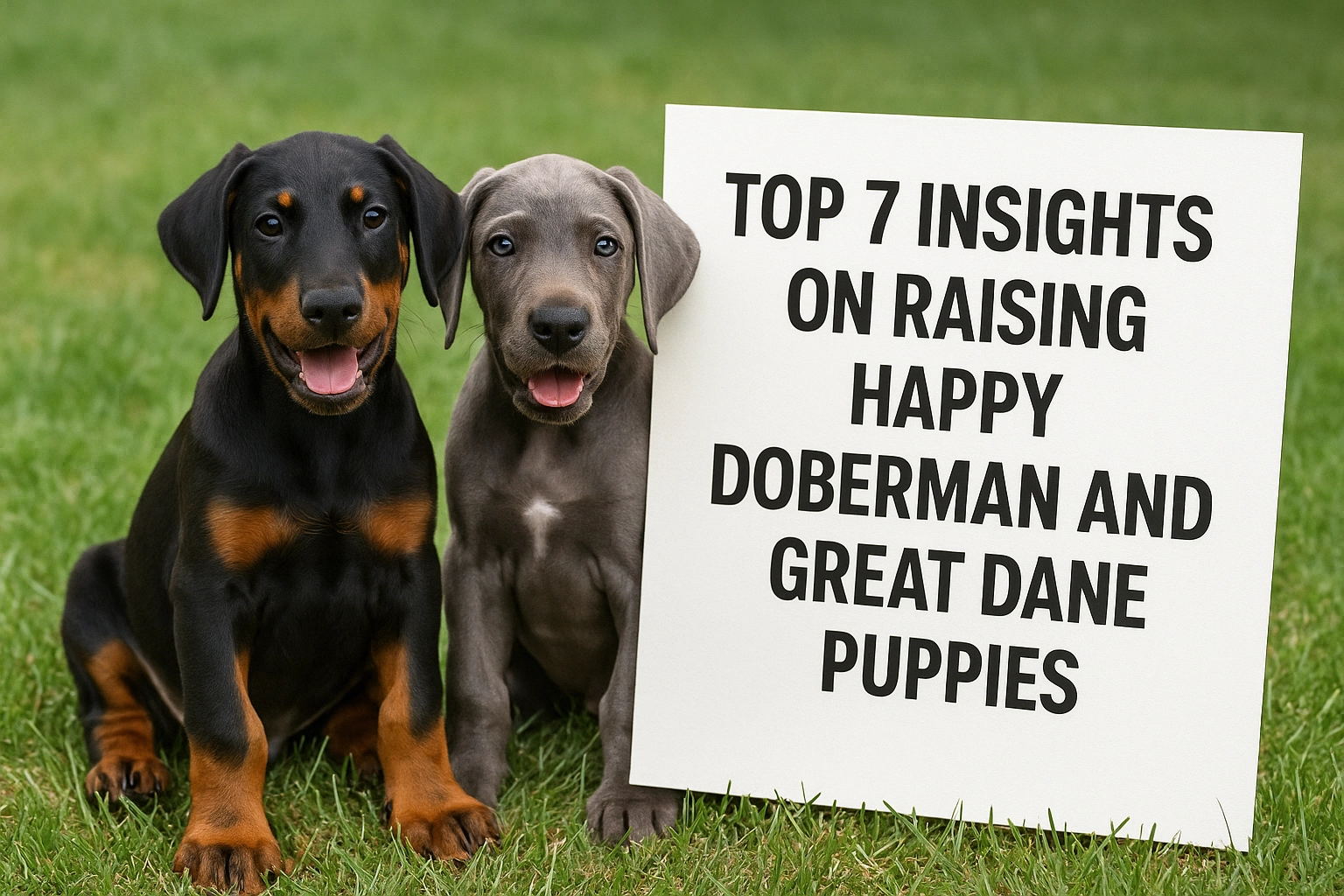
Big paws, bigger hearts. If you are bringing home doberman great dane puppies, you are in the right place. These gentle giants grow fast, think fast, and feel deeply. That mix can be magical for beginners, as long as you start with the right game plan. Too much exercise can stress young joints, and too little structure can fuel chaos. With a few smart habits, you can raise a calm, confident pup who loves learning.
Below are seven beginner friendly insights that cut through the noise. You will learn what to expect from temperament and energy, how to set up a safe home base, socialization that builds real confidence, age appropriate exercise, simple training cues and manners, nutrition for rapid growth, and daily routines that keep the peace. Expect clear steps, quick wins, and common mistakes to avoid. Whether you are prepping for pick up day or already knee deep in chewed shoelaces, this list will help you bond, prevent problems, and enjoy the ride. Ready to meet your new favorite training plan? Let us dive in.
1. Importance of Health Testing for Dobermans and Great Danes
- Hips and elbows: Large breeds grow fast, so joint screenings are non negotiable. Both Dobermans and Great Danes are prone to hip and elbow dysplasia, which can lead to arthritis and costly surgery. Ethical programs submit radiographs to OFA for certification at or after 24 months, then recheck as needed before future breedings. Ask to see OFA numbers for both parents, and confirm that the films were read by board certified radiologists. For context on timing and recommended tests, see the DPCA breeding FAQs.
- Cardiac and thyroid: Dilated cardiomyopathy is a top concern in Dobermans, and heart disease is relevant in Danes as well. Annual Holter monitoring and a cardiologist performed echocardiogram are the gold standard, ideally within 12 months of breeding, or within 3 months of a planned pairing, per DPCA guidance. The Great Dane Club of America recommends bi annual heart and thyroid exams for breeding stock; a full thyroid panel every 12 to 18 months helps catch subclinical issues early. Request printed cardiology reports and complete thyroid panel results for both parents.
- Eyes: Inherited eye conditions can be silent until late. Annual CAER eye exams by a veterinary ophthalmologist keep breeding dogs cleared and protect future litters. Certificates are valid for one year, so make sure the date is current. The DPCA’s buyer guide underscores the importance of yearly eye checks, useful for Dobermans and informative for Dane owners too. Review the details here: Buying a Doberman Pinscher.
- DNA panels: Embark for Breeders screens for over 250 genetic health risks and traits. For Dobermans, that includes DCM2 and von Willebrand disease; for Great Danes, conditions like degenerative myelopathy and inherited myopathy. Use results to avoid at risk pairings while preserving genetic diversity.
Quick action checklist for doberman great dane puppies
- Verify OFA hips and elbows at 24 months or older
- Request recent Holter and echo reports, plus a full thyroid panel
- Ask for a current CAER eye certificate
- Review Embark summary pages for both parents
Next, we will look at how temperament testing and early socialization set puppies up for success.
2. Best Practices in Natural Rearing Methods
1. Explore homeopathic nosodes for improved immunity
Nosodes are homeopathic preparations derived from disease material, diluted so no active pathogens remain, and some holistic practitioners use them to nudge the immune system. For example, parvovirus and distemper nosodes are often given weekly from 4 to 8 weeks of age, then every 2 to 4 weeks until about one year, with extra doses before high‑risk exposures, and kennel cough nosodes may be used more intensively before boarding or classes, then tapered over months. You can review sample protocols here: Homeopathic Nosodes for Dogs. Evidence for nosodes is mixed, and at least one report highlighted by Dr. Jean Dodds noted they did not prevent parvovirus in a controlled setting, so do not skip your veterinarian’s guidance or core disease prevention plans. See the discussion here: Beware Misinformation from “Experts”. If you are raising doberman great dane puppies, partner with an integrative vet, document responses carefully, and use nosodes only as part of a balanced wellness plan.
2. Holistic healthcare techniques include natural diets and therapies
Natural rearing centers on superior nutrition, minimal stress, and low toxin exposure. Many families choose a species‑appropriate raw or gently cooked diet built around lean muscle meat, organ meats in small amounts, and a balanced calcium source, while others use large‑breed growth formulas with clean ingredient panels. For giant and large breeds, slow and steady growth is key, so avoid excess calories and unbalanced calcium. Add omega‑3s from sardines or high‑quality fish oil, rotate proteins to diversify nutrients, and use stainless steel bowls and fragrance‑free cleaners to reduce chemical load. Complement nutrition with gentle therapies such as massage for body awareness, acupuncture for comfort and recovery, and calming botanicals under veterinary guidance. Regular nose work games, puzzle feeders, and short training sessions also support mental health.
3. Strengthen the bond through natural and ethical care approaches
Bonding deepens when care feels intentional and kind. Try hand‑feeding part of meals to build focus, practice consent‑based grooming and body handling, and take daily “sniffaris” to let your puppy explore at their pace. Choose sustainably sourced foods and cruelty‑free grooming products to align health with ethics. As an ethical Houston breeder focused on temperament and longevity, we pair natural rearing with comprehensive support and a 6‑year health guarantee, then coach families to keep that momentum at home. These habits set the stage for confident, resilient Doberman and Great Dane companions as they grow.
3. The Value of a Health Guarantee for Puppies
- A real 6-year safety net from a Houston ethical breeder. Draggin Dobermans & Great Danes offers an uncommon, comprehensive 6-year health guarantee for Doberman Great Dane puppies and purebreds alike, covering non-traumatic hip dysplasia, non-traumatic cervical vertebral instability, dilated cardiomyopathy, and symptomatic von Willebrand’s disease. You can see details on their [puppies for sale page](https://www.draggin.net/puppies-for-sale). This length of coverage aligns with responsible practices like DNA panels for Dobermans, including DCM testing, and hip evaluations required by the Great Dane Club of America. Action step: ask for a sample contract, clarify how claims are handled, and keep organized records of vet visits, diet, and exercise to support any future health claims.
- Proof the priority is longevity, not quick profits. A long guarantee is possible only when a breeder invests in smaller litters, health-tested parents, and careful rearing, which lowers the chance of expensive, preventable problems. Draggin’s limited program and natural rearing protocols, like superior nutrition and low-toxin environments, reflect that long-game approach. Explore their philosophy and health commitments here: Doberman & Great Dane Puppies Houston | 6-Year Guarantee. Action step: request documentation such as OFA or PennHIP results, DCM screening history, and vWD status for both parents, then ask how those results inform pairings.
- Real peace of mind for new puppy parents. Many breeders offer only 1-year conditional coverage, which may require a fast vet check to stay valid, as seen in this typical example of a short-term policy: Health Guarantee. A 6-year window covers a major portion of a Doberdane’s average 9 to 10 year lifespan and aligns with the period when heart, joint, and bleeding disorders are most likely to appear. Action step: schedule regular wellness exams, consider routine cardiac screening for Dobermans, and follow the breeder’s care guide so your guarantee remains valid and your puppy thrives.
4. Understanding Ethical Breeding Practices
A truly ethical program starts long before puppies are born. For doberman great dane puppies, choices about timing, parents, and planning shape everything from temperament to long-term health. Here is what responsible breeders, including top programs in Houston, put first.
1. Avoid breeding on the first heat to protect young bitches
First heats often occur between 6 and 14 months, but large and giant breeds are not physically or emotionally mature then. Young bitches can have underdeveloped mammary tissue and poorer maternal instincts, and early pregnancies add unnecessary stress. Veterinary guidance recommends waiting until full maturity, typically around 2 years, to reduce pregnancy and whelping complications. See the clinical context in these veterinary breeding age guidelines and the AKC advice for preventing pregnancy problems. Action step: ask the breeder the dam’s age at first breeding, her pre-breeding health clearances, and who is on call for whelping.
2. Prioritize temperament and longevity over litter quantity
Responsible programs select parents for stable, confident temperaments and proven longevity, not how many litters they can produce. That means temperament evaluations, working or CGC-style titles that demonstrate stability, and pedigrees that document lifespans and cause of death. Capping the number of lifetime litters protects the dam’s health and gives breeders time to raise well-socialized puppies. For context on litter tracking and registration, review this overview on AKC litter registration considerations. Action step: request temperament scores or titles, meet the dam if possible, and ask for a pedigree annotated with relatives’ ages and health notes.
3. Carefully planned litters reduce breed-specific disease risk
Planning reduces risk. Dobermans should have comprehensive genetic panels that include DCM-related markers, plus annual Holter and echocardiogram when indicated. Great Danes should have documented OFA hip evaluations, aligning with the Great Dane Club of America’s expectations. Pairings should avoid close relatives, using a calculated coefficient of inbreeding to maintain diversity. Action step: ask for OFA links, cardiac screening results, and the COI for the planned litter. Well-matched parents, combined with thoughtful rearing, give puppies the best chance at a long, even-tempered life.
5. Exploring the Intelligence and Nature of Doberdanes
1. Brainy guardians make an enticing choice
Doberdanes blend quick Doberman smarts with steady Great Dane instincts, an enticing mix for many families considering doberman great dane puppies. Dobermans rank among the top five most intelligent breeds and obey first commands about 95 percent of the time, see Doberman intelligence overview. Balanced by the Dane’s gentle nature, the result is a watchful, affectionate companion that reads the room. Action tip, begin socialization from 10 to 16 weeks with short store visits and calm park laps, rewarding quiet curiosity and loose leashes. Teach place, leave it, and watch me so protective instincts become reliable manners.
2. Loyal, obedient family members
This hybrid is famously velcro, often shadowing favorite people and settling where you are. That loyalty fuels training when you keep sessions short, happy, and reward based. Try three five-minute games daily, hand targeting for focus, the name game for recall, and settle on a mat during meals. Set household rules, rotate handlers so the dog listens to everyone, and create an off-duty bed the kids respect. For context on the Doberman roots of vigilance and devotion, see temperament fundamentals.
3. Active engagement keeps energy and happiness on track
At 95 to 140 pounds, Doberdanes need 60 to 90 minutes of daily exercise split into two or three sessions. A simple plan, morning brisk walk, afternoon sniffari or flirt pole, evening fetch or tug cooldown. Add mental work, puzzle feeders, scatter feeding, 10-minute obedience, and beginner nose work to prevent boredom. Without outlets they can become destructive or vocal, so schedule two enrichment breaks on busy days and use baby gates to manage downtime. With a typical 9 to 10 year lifespan, steady engagement and calm routines support wellbeing, and our Houston program sends new families home with tailored activity plans.
6. Comparing Doberman and Great Dane Lifespans
- Dobermans average about 9 years, with recent analyses placing life expectancy near 9.1 years. While some regional studies report 8 to 11 years, heart health often makes the biggest difference. Dilated cardiomyopathy is a known risk in the breed, so choose breeders who do DNA panels, Holter monitoring, and echocardiograms on breeding dogs. For owners, schedule annual cardiac checks starting by age 4 to 5, then twice yearly after 7. Keep your Doberman lean, aim to feel ribs with light pressure, and build daily aerobic exercise into your routine. These simple habits, combined with stress reduction and nutrient-dense, species-appropriate diets, can meaningfully support longevity.
- Great Danes typically live 8 to 10 years, though many reach senior status around age 5. Their size increases risks like bloat, also called gastric dilatation volvulus, which can be rapidly fatal. Talk with your veterinarian about prophylactic gastropexy, often done alongside spay or neuter, and use slow feeders, multiple small meals, and rest periods before and after eating. Joint care is another longevity lever, manage growth carefully in puppies, keep adults trim, and add low-impact exercise like leash walks and swimming. Routine wellness labs and blood pressure checks help catch issues early, a smart cadence is twice yearly once your Dane turns 5.
- Awareness of lifespan helps you plan a fulfilling life journey with your pet, and it starts in puppyhood. Map out life stages, intensive socialization from 8 to 16 weeks, confidence-building training through year two, preventive screenings by midlife, and senior comfort plans later on. Budget for insurance and a savings cushion for emergencies, especially for bloat or cardiac care. Choose an ethical Houston breeder who prioritizes comprehensive health testing, natural rearing, and long-term support for doberman great dane puppies. If you love the blend, note that Doberdanes often average 9 to 10 years, though individual care always wins the day.
Conclusion: Making Informed Choices for a Joyful Life with Your Puppy
- Extend life and joy with smart daily habits. Keep your Doberman, Great Dane, or Doberdane lean, use a slow-feeder, and build joints safely with low-impact exercise. Book wellness exams every 6 months, add baseline labs and a cardiac screen from age 2 for Dobermans, since DCM is a known risk. With proactive care, Doberdanes often reach the upper end of their 9 to 10 year lifespan, and they stay happier with mental games like scent work and short training bursts.
- Choose ethical breeding and steady checkups from day one. When shopping for doberman great dane puppies, ask any breeder for proof of comprehensive DNA panels for Dobermans, including DCM, and for Great Dane parents’ hip evaluations consistent with the Great Dane Club of America standards. Request OFA numbers, cardiac results, and a clear vaccination and socialization plan, then continue that plan with scheduled puppy visits and a lifelong preventive calendar. Long health guarantees and limited, temperament-focused programs signal a breeder investing in longevity, not volume.
- Implement natural rearing and a complete healthcare plan. Prioritize a fresh, species-appropriate diet, balanced for large-breed growth, and reduce toxins by swapping to pet-safe cleaners and untreated yard care. Track weight, resting heart rate, and stool quality in a simple log to catch changes early. Round out the plan with parasite prevention, titer-based vaccine discussions, hip and elbow imaging at maturity, and daily decompression to limit stress.