
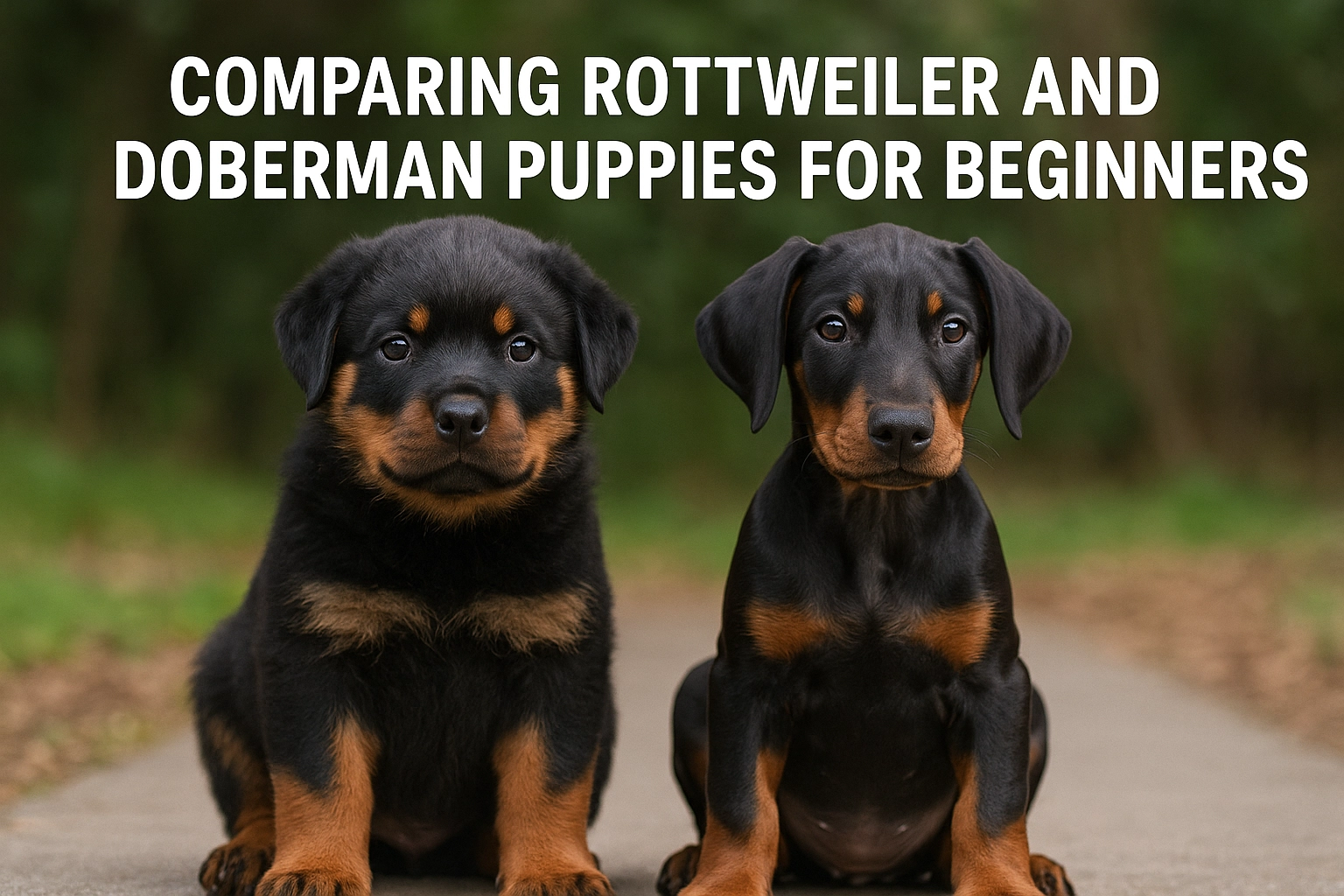
Thinking about bringing home a big-hearted guardian in a small, wiggly package? If you are torn between Rottweiler and Doberman pups, you are in the right place. Both breeds are smart, loyal, and protective, yet they grow into very different companions. For beginners, choosing well starts with understanding what daily life will look like after the puppy breath fades.
In this beginner-friendly comparison, we will look at rottweiler doberman puppies side by side. You will learn how their energy levels compare, how much training they need, and what kind of socialization sets them up for success. We will cover size and growth, exercise routines, grooming basics, common health considerations, and what to budget for food, vet care, and insurance. You will also get simple tips on crate training, early obedience, and how to spot a responsible breeder. By the end, you will know which breed fits your space, schedule, and style, so you can welcome the right best friend with confidence.
Understanding Breeding and Health Considerations
Why ethical breeding and health testing matter for beginners
When you are comparing rottweiler doberman puppies, start with the breeder’s ethics and evidence of health testing. Ethical programs select parents for stable temperament, genetic soundness, and longevity, not just looks. This cuts the risk of inherited disease and gives you a predictable companion for family life, sport, or protection training. Look for written proof of testing, clear contracts, and transparent communication. At Draggin Dobermans & Great Danes in Houston, a six-year health guarantee signals confidence in their dogs and accountability to families. That kind of long-term support is especially reassuring for first-time owners.
Side-by-side health testing essentials
Doberman-specific screening should follow AKC guidance, typically including hip evaluation, a cardiac exam, ophthalmologist evaluation, thyroid testing, and a DNA test for von Willebrand disease. Rottweilers also need robust orthopedic and cardiac screening, especially hips and elbows, plus eyes and overall temperament assessments due to their power and confidence. Ask every breeder for verifiable OFA or equivalent hip and elbow results, a recent cardiac report from a veterinarian, eye clearances, and any available DNA panels. Confirm that results belong to the actual parents of your litter. For a simple checklist and what to request, see the tips in Top 6 Tips for Finding Reputable Doberman Breeders – Draggin Doberman and Great Danes.
vWD in Dobermans explained
Von Willebrand disease is a heritable clotting disorder common in Dobermans, most often the milder Type I. Studies have reported that a large portion of Dobermans can carry low von Willebrand factor levels, which raises bleeding risk with surgeries or injuries. Responsible breeders use the vWD DNA test and plan pairings that avoid producing at-risk puppies. Ask to see each parent’s vWD status and how that informed the mating. Also remember that DCM genetics are complex, so a good program pairs DNA insight with regular cardiac evaluations. This layered approach reduces risk rather than promising absolutes.
What Draggin’s program means for your puppy
Draggin Dobermans & Great Danes combines comprehensive health testing with natural rearing protocols, including low-toxin environments, careful socialization, early veterinary exams, vaccinations, microchipping, and deworming before go-home. The six-year health guarantee reflects selective, limited breeding focused on temperament and longevity. If you are set on a Doberman, these practices provide a clear benchmark. If you are exploring a Rottweiler, use the same standards when you evaluate breeders, prioritizing orthopedic and cardiac health, temperament, and transparency. Begin your shortlist by asking for health records first, then meet the parents to confirm the stable, confident temperament you want in your home.
Temperament and Personality Traits
Dobermans: loyal, protective, and intelligent
Among rottweiler doberman puppies, Dobermans are called velcro dogs because they bond tightly and prefer to stay within arm’s reach. That loyalty pairs with natural protectiveness, so they excel at calmly alerting and staying attentive to their family. Their intelligence shows up fast, many pups master sit, down, and name recognition within a few short sessions, as outlined in this Doberman temperament overview. Daily brain work matters, think 10 minute scent games, place training, and puzzle feeders to prevent boredom.
Rottweilers: confident, affectionate, and brave
Rottweilers tend to meet the world with a calm, wait and see attitude, which reads as quiet confidence. With their people, they are cuddly and affectionate, often choosing lean-ins over big displays. Bravery shows in steady, measured responses rather than reactivity, the hallmark of a reliable guardian, as noted in this Rottweiler personality overview. Because they are powerful, consistent rules from day one help channel that confidence into manners.
Training and socialization that set puppies up to thrive
Both breeds flourish with positive reinforcement, short sessions, and clear boundaries. Aim for 3 to 5 minute sessions, 5 to 8 times daily, mixing recall, loose leash, and impulse control, like sit and wait at doors. Enroll in a puppy class by 8 to 10 weeks, then continue with beginner obedience at 5 to 6 months. Socialization windows peak between 3 and 14 weeks, so log weekly goals, five friendly people, two neutral dogs, three new surfaces, and one new location, always paired with treats.
How Draggin’s program prioritizes temperament and longevity
Draggin’s limited pairings prioritize stable, people focused temperaments, then confirm them with structured evaluations at seven weeks. Puppies are naturally reared in low fragrance, low stress spaces and kept with mom and littermates long enough to learn bite control and canine manners. Comprehensive health testing, including Doberman cardiac screens, supports longevity that complements sound behavior. Families receive tailored go home plans to keep training and socialization on track through adolescence.
Life Expectancy and Longevity
Average lifespan, side by side
When comparing Rottweiler Doberman puppies, it helps to look at typical lifespans to set expectations. On average, Dobermans live about 10 to 12 years, while Rottweilers often average 8 to 10 years, a difference linked largely to size and breed-specific health risks. You can see this summarized in this helpful overview of breed differences and lifespan comparisons in Doberman vs. Rottweiler lifespan overview. Of course, averages are not destinies. Genetics, preventive care, and day-to-day lifestyle choices can add meaningful years.
What really drives longevity
Genetics and thoughtful breeding matter. Rottweilers can be prone to orthopedic disease and certain cancers, while Dobermans face higher risk of dilated cardiomyopathy and cervical spine issues, points echoed in this guide to health risks and breed differences. Size influences metabolism and wear on joints, so keeping large breeds lean is critical. Practical steps include maintaining a body condition score around 4 to 5 out of 9, daily low-impact exercise, and annual wellness labs. For Dobermans, add yearly heart screening when recommended by your veterinarian, for example echocardiogram or Holter monitoring, and for Rottweilers, hip and elbow evaluations as they mature. Timing of spay or neuter can also influence outcomes; one review on Rottweilers notes later-life spay correlated with increased longevity in females, see Rottweiler life expectancy guide. Discuss timing with your vet.
Draggin’s commitment and life-beyond-the-average
Our program centers on longevity from day one. We pair comprehensive health testing with a limited, temperament-first breeding plan, including cardiac evaluations for Dobermans, DNA screening where applicable, and orthopedic, eye, and thyroid assessments as advised for each breed. Puppies are raised with natural rearing principles, meaning a clean, low-toxin environment, robust socialization, and nutrition that supports joint and heart health. We back this with a 6-year health guarantee and lifetime breeder support, so families always have a roadmap for preventive care. Anecdotally, our client community includes Dobermans thriving well past the averages, often reaching 12 to 14 years when kept lean, mentally engaged, and on a veterinary plan that includes periodic cardiology checks. With the right start and consistent care, both breeds can enjoy longer, fuller lives, and you can plan confidently for the years ahead.
Living Environment and Lifestyle Needs
Energy and space basics
Both Rottweilers and Dobermans are athletic, high-drive dogs that need outlets for energy and brainpower. As working breeds, Rottweilers thrive when they have purposeful activity and consistent structure, which helps prevent restlessness and unwanted chewing, as outlined in the Rottweiler breed overview and care. Dobermans are similarly energetic and excel with daily physical and mental challenges that keep them engaged. In terms of space, both breeds can adapt to apartments if exercise is nonnegotiable. For example, a well organized 1,000 to 1,400 square foot apartment can work for a Rottweiler when routines are dialed in, according to Rottweiler apartment living tips; a securely fenced yard is a bonus for either breed.
Daily exercise plans
Plan on structured movement every day. Many adult Rottweilers do best with roughly 1 to 2 hours that mix brisk walks, controlled fetch, hill hikes for strength, and short impulse control drills, supported by the breed’s need for consistent work in the PetMD profile. Adult Dobermans typically need at least 60 to 90 minutes, blending interval jogs, obedience games, and scent puzzles, per exercise needs for Dobermanns. Puppies of both breeds should have short, frequent play blocks on soft surfaces, avoiding forced running to protect growing joints. Seniors still benefit from daily movement, prioritizing low impact options like swimming or shaded strolls during Houston’s hot months.
How Draggin prepares puppies for real life
At Draggin in Houston, TX, our natural rearing emphasizes species appropriate nutrition, non toxic home environments, and extended time with mothers and littermates. This foundation supports resilient immunity, calmer stress responses, and steady digestion, practical benefits families notice when integrating rottweiler doberman puppies into busy homes. We pair that with thoughtful socialization, early neurological stimulation, crate and car exposure, leash foundations, and problem solving games to satisfy strong working drives. Our limited program prioritizes temperament and longevity, supported by comprehensive health testing, including advanced cardiac evaluations and genetic panels for Dobermans, and a 6 year health guarantee. Quick guide, choose a Doberman if you want a close working partner for daily runs and training sessions; choose a Rottweiler if you prefer a sturdy hiking buddy and have space for strength focused play, then tailor routines to your household rhythm.
Choosing Between Rottweiler and Doberman Puppies
Start with your lifestyle
Think about your daily rhythm before choosing between rottweiler doberman puppies. Dobermans typically need 1.5 to 2 hours of vigorous activity per day, which can include running, structured fetch, and agility-style drills, see these expert Doberman exercise guidelines. Rottweilers usually thrive on moderate, consistent exercise, such as brisk walks and purposeful play, and they tend to settle more readily in the home. Dobermans are often affectionate “velcro dogs,” which suits families that enjoy close companionship and frequent interaction, as outlined in this side by side temperament overview. If you are a first-time owner with time for training and structure, a Doberman can be very responsive; Rottweilers may ask for firmer boundaries and clarity from confident handlers, a point echoed in this handler experience comparison.
Space, time, and commitment
Both breeds can adapt to different homes, but needs vary. A Doberman can live in an apartment if you reliably meet exercise and mental-enrichment goals, for example two 45 minute sessions plus short training bursts. A Rottweiler is often most comfortable with a yard and predictable routines, paired with 60 to 90 minutes of daily activity. Dobermans may be prone to separation stress if left alone too long, so plan for crate training, puzzle feeders, and midday breaks. Rottweilers tend to be a bit more independent, yet still require early socialization and ongoing manners training.
Match breed to your family
For households with kids, both breeds do well when socialized early and given clear rules. Dobermans are alert and quick to respond, which suits active families that enjoy training games and sports. Rottweilers bring calm confidence, often fitting homes that prefer a steadier pace with structured guidance. Multi-pet families should prioritize slow introductions, obedience foundations, and supervised play.
How Draggin supports your decision
Draggin in Houston focuses on ethically bred, health-tested Dobermans with a limited program centered on temperament and longevity. Puppies are raised with natural rearing protocols, early socialization, and a 6 year health guarantee. New owners receive individualized matchmaking, go home guidance, and lifetime support. Draggin families often share that crate training, routine building, and public outings feel easier with this foundation, and references are available to help you learn from their experiences.
Conclusion: Making the Right Choice for Your Family
Comparing rottweiler doberman puppies, you will see shared traits: working drive, loyalty, protective instincts, and daily exercise needs. Dobermans are typically more handler focused, a bit lighter and quicker, ideal for active owners who want a jogging partner and training games. Rottweilers often mature more slowly, with heavier bone and a calm off switch at home once exercised, which suits structured jobs like carting or tracking. Both can be gentle with children when raised thoughtfully, but supervision and consistent training are non-negotiable. Longevity differs slightly, with Dobermans averaging about 10 to 12 years and Rottweilers around 9 to 10; purposeful selection for longevity matters.
Whichever path you choose, prioritize ethical breeding and proof of health. Ask to see OFA or equivalent results for hips and elbows, a cardiac echocardiogram, and eye clearances; for Dobermans, add DNA testing for DCM plus a 24-hour Holter. Confirm structured socialization and, if offered, natural rearing practices like low-toxin environments and extended time with mom and littermates. Visit in person when possible, meet adult relatives, and review contracts and support policies. At Draggin’s in Houston, our limited program centers on temperament, sound structure, and longevity, backed by comprehensive health testing, natural rearing protocols, and a six-year health guarantee. We guide families to the right fit, from activity level to training goals, and provide lifetime breeder support. Action step, list your daily schedule, training experience, and space, then schedule a call and a visit to choose the puppy who thrives with you.